




JOHANNESBURG, South Africa — Ghanaian authorities have begun repatriating citizens from South Africa following weeks of anti-immigrant protests that have heightened fears of renewed xenophobic violence across the country.
The first group of Ghanaians was scheduled to depart from Johannesburg on Wednesday morning after hundreds registered with the Ghanaian embassy seeking assistance to return home.
According to officials, about 300 people were expected to leave in the initial phase, while the remaining citizens would undergo screening before being repatriated later.
The operation comes after demonstrations against illegal immigration spread across several South African cities, raising concerns among foreign nationals about their safety and livelihoods.
Embassy Coordinates Emergency Departures
Dozens of buses chartered by the Ghanaian embassy reportedly transported passengers to OR Tambo International Airport in the early hours of Wednesday morning.
The passengers included men, women, and children, while a separate group escorted in a police vehicle was kept under security watch away from the main crowd.
Ghanaian authorities estimate that around 800 citizens have so far registered for voluntary repatriation from South Africa.
Benjamin Quashie said the Ghanaian government had acted after citizens expressed fears for their safety amid escalating tensions.
“The Ghanaian government listened to the plight of its citizens in South Africa, who felt that their lives were in danger, who felt like the economic activity that they were engaging in had come to a standstill, who felt unwelcome in this country,” Quashie said.
He added that the government had a reintegration strategy to support returnees and help them restart businesses back home.
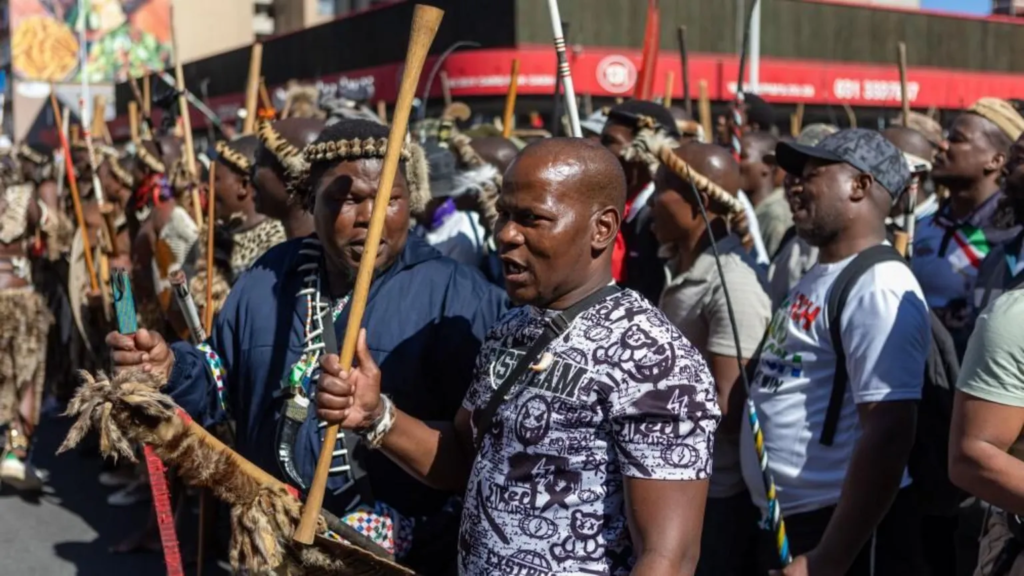
Migrants Fear Violence Ahead of June Deadline
The protests have been organised by March and March, a citizen-led movement demanding stricter immigration enforcement.
The group has issued a June 30 deadline for undocumented immigrants to leave South Africa, arguing that illegal migration places pressure on public services and economic opportunities.
Rudolph, a Ghanaian salon owner who has lived in South Africa for a decade, said the protests had created fear and uncertainty among foreigners.
“It’s not comfortable for us to stay here anymore, so we have to go. I think we will find peace at home,” he said.
“The protests started in Durban, and they’ve escalated to other provinces. So definitely something bad could happen,” he added.
South Africa Faces Renewed Xenophobia Concerns
South Africa has a long history of tensions linked to immigration and unemployment.
In 2019, at least 12 people were killed during xenophobic attacks targeting foreign nationals, while 62 people died in widespread anti-foreigner violence in 2008.
Earlier this month, the Government of South Africa condemned criminal acts targeting foreigners while acknowledging the need to address illegal immigration.
The repatriation exercise underscores growing anxiety among African migrants who now fear becoming targets as political and economic frustrations intensify in the country.


