




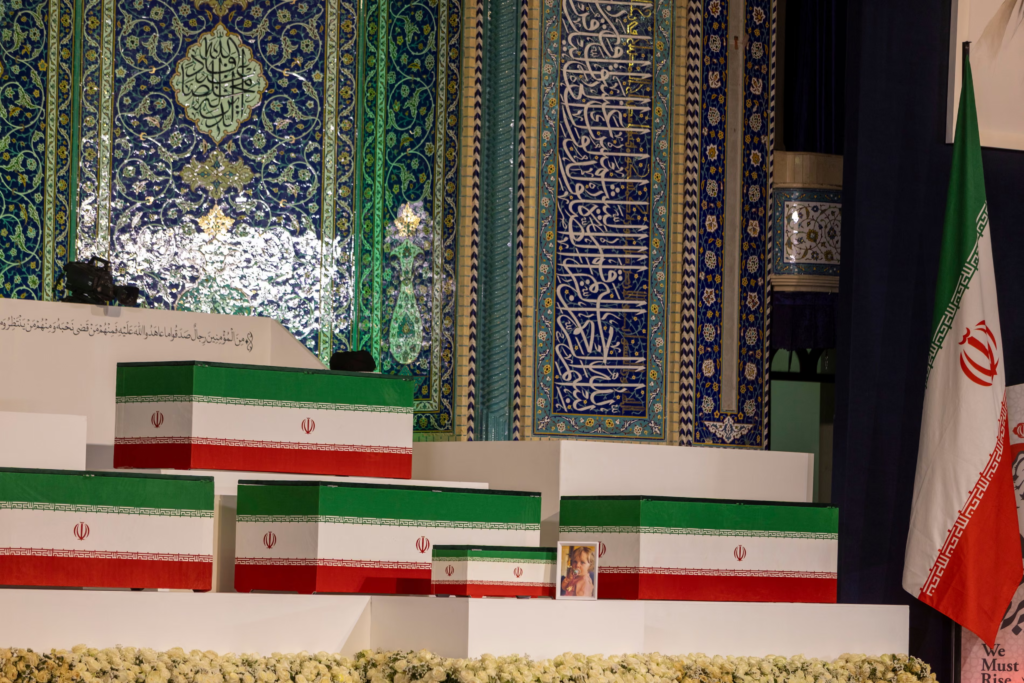
TEHRAN, Iran — Iran has begun six days of public funeral ceremonies for Supreme Leader Ayatollah Ali Khamenei, who was killed in a United States-Israeli airstrike on his official residence in Tehran on February 28, according to Iranian state media.
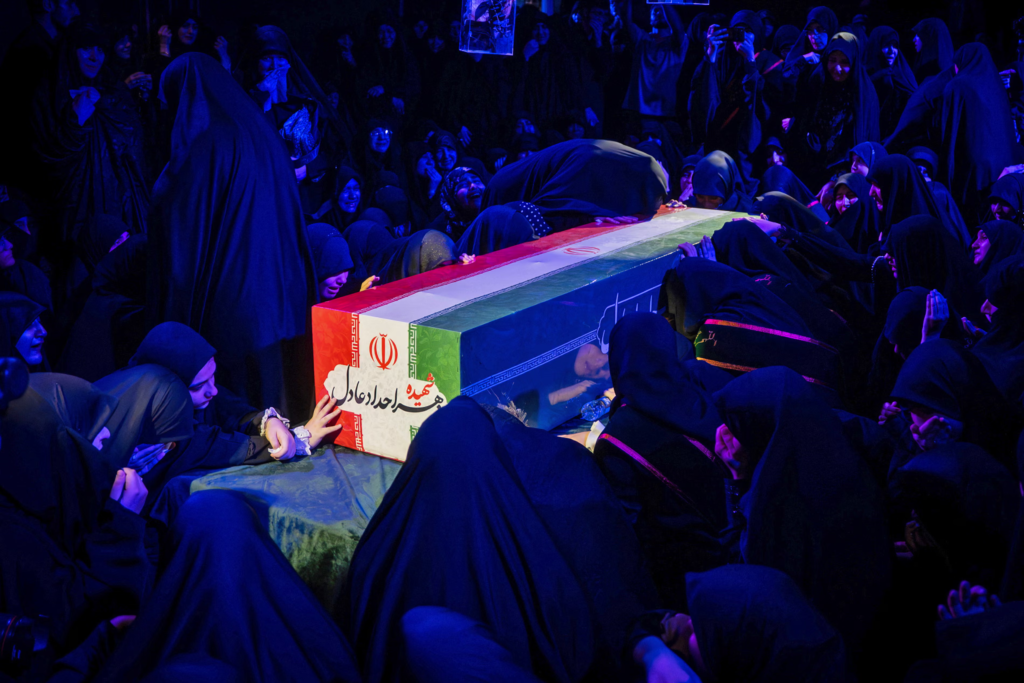
Thousands of mourners gathered at Tehran’s Grand Mosalla religious complex on Saturday to pay their final respects, carrying red banners symbolising vengeance as they awaited the arrival of Khamenei’s coffin.
The funeral marks one of the most significant state ceremonies in Iran’s recent history following the death of the country’s highest political and religious authority during the conflict between Iran, the United States and Israel.
Nationwide funeral programme
According to state television, Khamenei’s coffin will lie in state in Tehran until Monday before being transported to the holy city of Qom.
It will then be taken to neighbouring Iraq before the final burial in his hometown of Mashhad in northeastern Iran on Thursday.
Iranian authorities have imposed extensive security measures during the mourning period, including the temporary closure of the country’s airspace and restrictions on movement along streets where funeral processions will take place.
Foreign leaders attend
Several foreign dignitaries travelled to Tehran to pay their respects during the opening ceremony.
Among those in attendance were Pakistani Prime Minister Shehbaz Sharif and Pakistan’s Chief of Army Staff, Field Marshal Asim Munir.
Russia was represented by former President Dmitry Medvedev, who currently serves as Deputy Chairman of Russia’s Security Council, while China sent He Wei, Vice Chairman of the Standing Committee of the National People’s Congress.
Afghanistan’s Foreign Minister Amir Khan Muttaqi also attended, alongside an Indian delegation that arrived in Tehran on Friday.
Family members of the late Hezbollah leader Hassan Nasrallah, who was killed in an Israeli strike, were also present during the ceremonies.
Leadership questions remain
Iranian officials have not confirmed whether Mojtaba Khamenei, who succeeded his father as Supreme Leader, will make a public appearance during the funeral.
His absence from public view in recent months has fuelled speculation, although authorities have not commented on the matter.
Meanwhile, General Ahmad Vahidi of Iran’s Islamic Revolutionary Guard Corps was seen publicly for the first time in months during the ceremonies.
Vahidi, regarded as a key figure in Iran’s security establishment and foreign policy, had not appeared publicly since February 8, weeks before the outbreak of the US-Israeli military campaign against Iran.


