




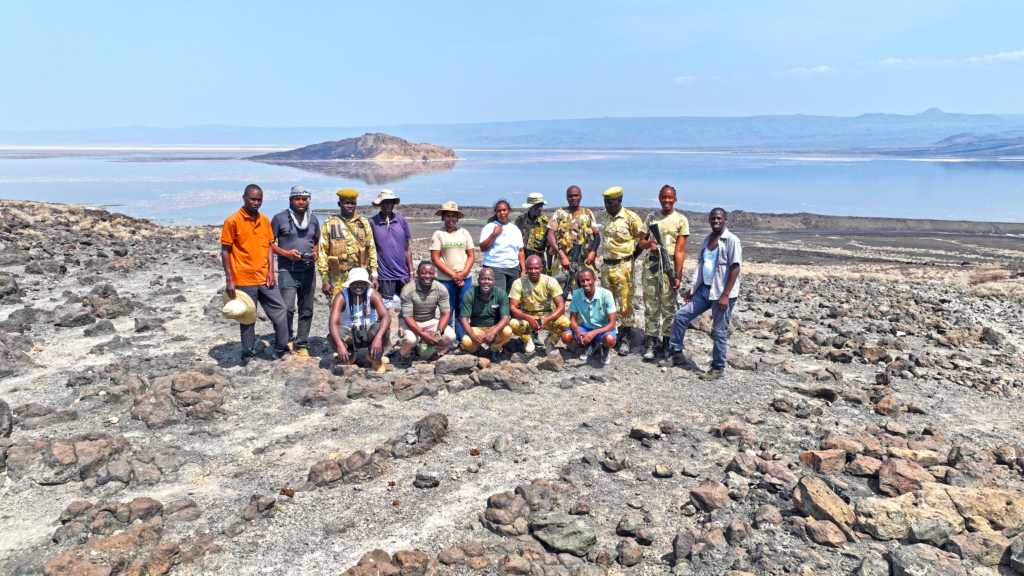
NAIROBI, Kenya — The Kenya Wildlife Service (KWS), in partnership with the National Museums of Kenya and conservation partners, has conducted a simultaneous census of Lesser Flamingos across seven Rift Valley lakes to better understand changes in the birds’ population and movement patterns.
The exercise covered Lakes Logipi, Magadi, Bogoria, Nakuru, Naivasha, Elementaita and Baringo, providing conservationists with a broader picture of how the iconic birds are responding to changing environmental conditions across Kenya’s Rift Valley lake system.
KWS said the census is particularly important as climate change continues to influence water levels, food availability and habitat conditions in the region’s lakes.
For decades, millions of Lesser Flamingos have been associated with lakes such as Nakuru, Bogoria and Elementaita, where their presence has created some of Kenya’s most spectacular wildlife and birding experiences.
However, changing ecological conditions have affected the availability of suitable feeding and breeding habitats, prompting flamingos to move between different lakes in search of favourable conditions.
“While flamingo numbers naturally fluctuate between lakes, Kenya’s Rift Valley remains one of the world’s most remarkable birding destinations,” KWS said.
The wildlife agency said the movement of the birds demonstrates their ability to adapt to changing environmental conditions while highlighting the importance of maintaining healthy wetland ecosystems across the region.
Census to guide conservation
KWS said the findings from the exercise will contribute to the development and implementation of Kenya’s National Recovery and Action Plan for the Lesser Flamingo.
The data is expected to help conservation agencies identify changing population trends, improve habitat protection and guide research and management interventions targeting the species and the wetlands on which it depends.
The simultaneous approach also allows conservationists to compare flamingo numbers and distribution across multiple lakes at the same time, providing a more accurate picture of their movements than isolated counts conducted at individual sites.
The Lesser Flamingo is particularly dependent on suitable wetland conditions and food sources, making the health of the Rift Valley’s alkaline and freshwater lakes critical to its survival.
Climate change puts wetlands under pressure
KWS noted that climate change is increasingly influencing the ecological conditions of the Rift Valley lakes, with variations in water levels and food availability affecting where flamingos can feed.
The changing distribution of the birds underscores the need for conservation efforts that extend beyond individual protected areas and consider the Rift Valley lake system as an interconnected ecological landscape.
Conservationists say protecting these wetlands is important not only for flamingos but also for numerous other bird species, wildlife and communities that depend on the lakes and their surrounding ecosystems.
The census therefore represents more than a count of birds. It is intended to provide information that will help authorities understand how one of Kenya’s most recognisable wildlife species is responding to environmental change.
KWS said every flamingo recorded through the exercise contributes to efforts to safeguard the species and protect the wetlands that sustain it.


