




CARACAS, Venezuela — A strong aftershock struck northern Venezuela on Monday, triggering fresh panic among residents already traumatised by last week’s devastating twin earthquakes that have claimed at least 1,719 lives and left tens of thousands of people missing.
The tremor, measured at magnitude 4.6 by the United States Geological Survey and 5.1 by Colombia’s Geological Survey, shook Caracas and the heavily damaged coastal city of La Guaira, where rescue teams continue searching for survivors trapped beneath collapsed buildings.
Although authorities reported no immediate additional structural damage, the latest quake prompted residents to flee into the streets as emergency sirens sounded across affected areas.
“I was asleep when the shaking woke me up. It felt almost as strong as Wednesday’s earthquake,” said Caracas resident Amarelis Mendoza.
In neighbourhoods including Altamira and San Bernardino, many people who had been sheltering outdoors since last week’s disaster abandoned makeshift camps in fear of further building collapses.
Search operations at the collapsed 22-unit Rita apartment building in San Bernardino were temporarily suspended for about 90 minutes as emergency crews assessed safety risks following the aftershock.
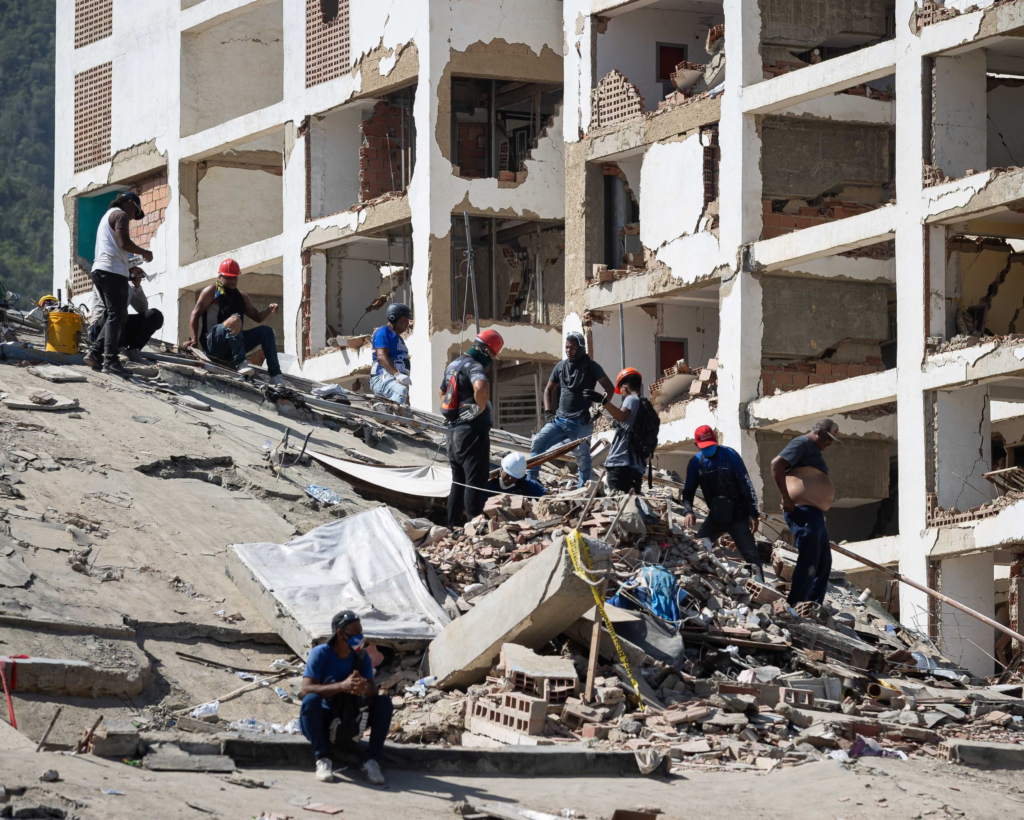
Several Caracas Metro services were also halted as engineers inspected infrastructure already weakened by last week’s earthquakes.
Despite some businesses beginning to reopen across the capital, humanitarian needs continue to grow as thousands of displaced families remain in parks, public squares and temporary shelters.
The United Nations has warned that the death toll could continue rising and announced plans to provide Venezuelan authorities with 10,000 body bags to support recovery operations if required.
UN Resident Coordinator Gianluca Rampolla del Tindaro said official casualty figures were expected to increase.
“We are definitely looking at a number that is higher than the one already reported,” he said, expressing hope that the final toll would remain below the contingency estimate.
International support has continued to expand, with the UN reporting that 27 countries have deployed more than 2,000 rescue personnel and over 160 search dogs to assist in search-and-rescue operations.
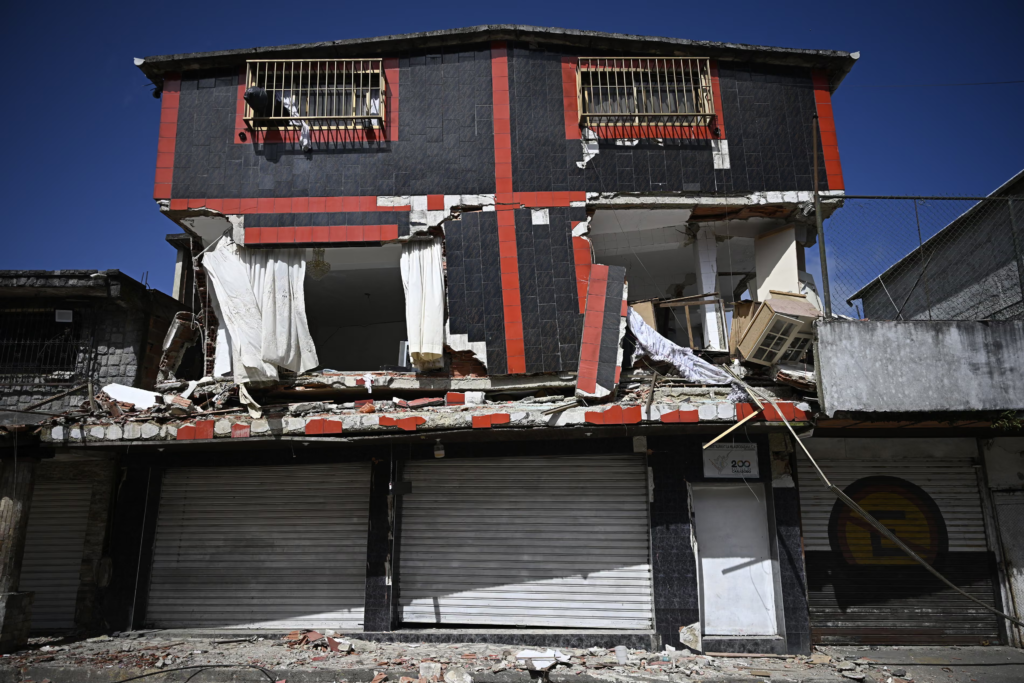
The United States military confirmed that engineers had restored operations at the Port of La Guaira, allowing humanitarian supplies and heavy rescue equipment to arrive aboard the USS Fort Lauderdale.
Rescue workers achieved a rare breakthrough on Sunday after pulling a man and his teenage son alive from collapsed buildings in La Guaira.
Interim President Delcy Rodríguez said the successful rescue demonstrated why search operations would continue despite diminishing hopes.
“Today we have rescued people who are still alive, and therefore these efforts will not be suspended,” she said.
However, rescue experts acknowledged that chances of finding additional survivors have fallen sharply beyond the critical 72-hour rescue window following major earthquakes.
Government figures indicate more than 5,000 people have been injured, while nearly 800 buildings suffered severe structural damage.
Millions of people are also reported to be without reliable access to clean water, sanitation, healthcare and shelter, deepening an already severe humanitarian crisis in a country weakened by years of economic hardship.
Public frustration has also intensified in some of the worst-hit communities, with residents accusing authorities of responding too slowly. Reports of looting have emerged in parts of La Guaira as shortages of food and essential supplies worsen.
The UN estimates physical damage from the disaster at approximately US$6.7 billion, equivalent to about six per cent of Venezuela’s gross domestic product. Meanwhile, the United States has doubled its humanitarian assistance package to US$300 million to support emergency medical care, food aid, shelter, water, sanitation and logistics.


