




NAIROBI, Kenya – Kenya Airways is targeting a fleet of more than 60 aircraft within three years, while expanding cargo, maintenance and aviation training businesses as part of a turnaround strategy aimed at strengthening the national carrier’s operations and financial position.
The airline’s immediate focus, however, is restoring grounded aircraft and stabilising its existing operations before pursuing faster expansion from 2027.
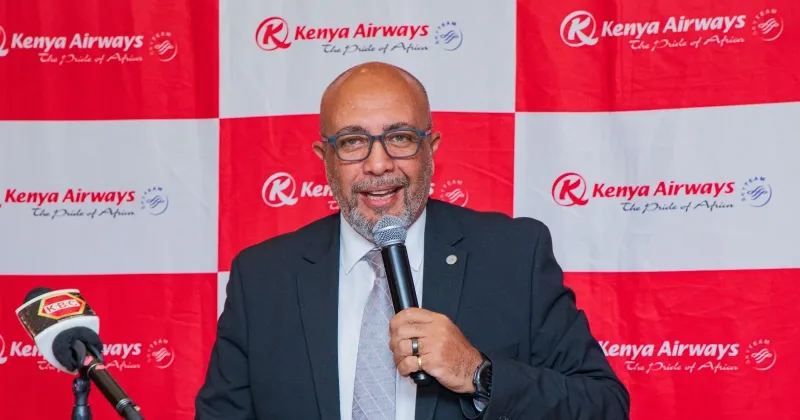
Speaking during a media editors’ roundtable in Nairobi on Wednesday, Kenya Airways Acting Group Managing Director and CEO Capt. George Kamal said the airline was targeting full fleet capacity by the end of 2026.
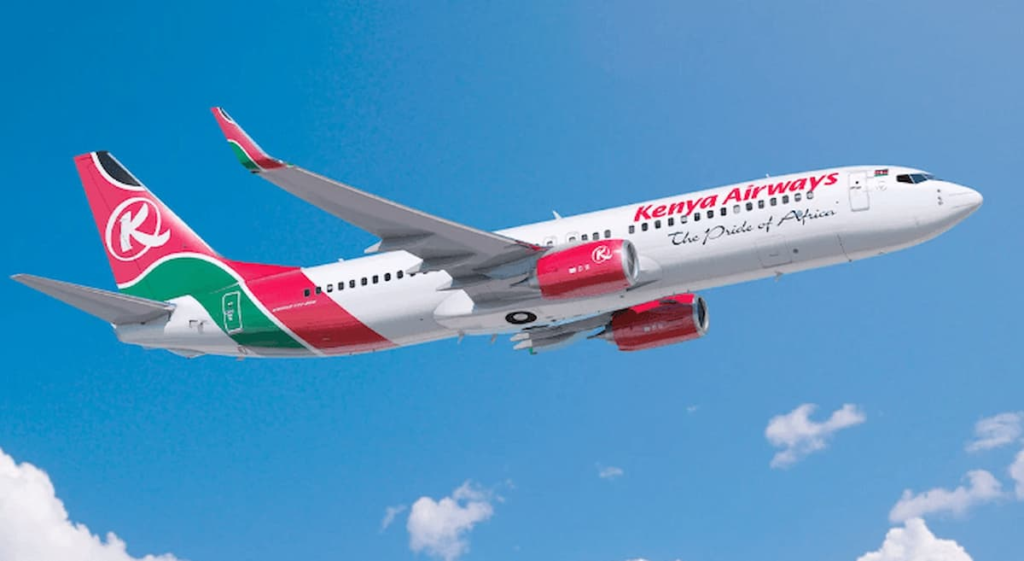
KQ currently operates about 25 to 26 aircraft, compared with just 19 of its 32 aircraft at one point in 2025. The wider fleet figure includes JamboJet.
Kamal said the airline’s medium-term ambition was to build towards approximately 60 aircraft or more over the next three years.
“We are not struggling in demand. We are struggling on availability and capacity of aircrafts. We need aircrafts,” Kamal said.
Aircraft shortages constrain KQ growth
KQ’s expansion plans come against a difficult global aviation environment characterised by shortages of aircraft engines and spare parts.
Three Boeing 787 Dreamliners were grounded for much of the first half of 2026, while delays in obtaining spare parts have extended some maintenance periods.
Kamal said some aircraft classified as grounded were actually undergoing scheduled maintenance that had taken longer than expected.
The airline also faces sharply higher operating costs, with its presentation showing a 72 per cent increase in fuel prices during the first half of 2026.
KQ has been unable to pass the full increase on to passengers through higher fares.
“I can’t. I can’t. We have limitations, so we only can increase up to a certain limit and that’s it. And the rest we have to take as an airline,” Kamal said.
The airline’s presentation also cited a global Boeing and Airbus order backlog of 16,036 aircraft, equivalent to an estimated 11.1-year clearance rate.
Demand remains strong
Despite capacity constraints, KQ says demand for its services remains strong.
The airline reported a cabin factor of more than 90 per cent on US and European routes in March 2026, while load factors on intra-African routes stood at approximately 75 per cent.
The challenge, Kamal said, was putting enough aircraft into service to meet that demand consistently.
The capacity shortage has also influenced KQ’s approach to domestic routes.
Kamal said the airline had not stopped serving Eldoret but had allowed its low-cost subsidiary, JamboJet, to operate more services on the route using smaller aircraft.
“It makes sense more to fly JamboJet, why? Because I can do more than one flight with a smaller aircraft and it’s a lower cost,” he said.
The approach allows the group to reduce fuel and maintenance expenses while matching aircraft size to passenger demand.
KQ targets bigger cargo business
Cargo is emerging as one of KQ’s main opportunities for increasing revenue beyond passenger operations.
Cargo currently accounts for about 11 per cent of the airline’s revenue, but KQ is targeting approximately 20 per cent within two to three years.
The airline also wants to increase its share of Kenya’s export cargo market.
Kamal said KQ currently handles about 70 tonnes of cargo per day, but would need to increase that to approximately 250 tonnes daily to reach a 40 per cent share of the target market.
“Today we are doing 70 tons a day. So when we need a 40pc of our market share, I need to be 250 tons per day. That’s the minimum, that’s a turnaround for us,” he said.
To support the expansion, KQ is considering acquiring or leasing dedicated freighter aircraft, including Boeing 767 and 777 freighters.
The strategy would allow the airline to tap into Kenya’s large export market while reducing its reliance on passenger revenue.
MRO City planned
KQ is also positioning its maintenance, repair and overhaul (MRO) business as a major future revenue stream.
The airline’s MRO division is EASA-certified and already serves other African carriers.
Kamal said KQ wants to expand beyond its current hangar operations and develop what he described as an MRO City, with 14 bays and the potential to create more than 2,000 direct jobs.
“We are not looking at MRO 2 hangars. We are looking at MRO City, providing more than 2,000 jobs, direct jobs,” he said.
The expansion would enable KQ to earn more from aircraft maintenance while building Kenya’s capacity as an aviation services hub.
Aviation academy and medical business
KQ is also looking to expand its aviation training academy.
The academy has IATA approval and offers programmes in partnership with London Metropolitan University, with training covering engineering, flight dispatch, pilots and cabin crew.
The airline is additionally exploring the expansion of its existing medical centre into a hospital, with Kamal saying KQ was engaging hospitals in India and Thailand on the plans.
KQ views the academy, medical centre, MRO and cargo operations as potential revenue-generating businesses that can complement its core passenger operations.
“These are all money makers,” Kamal said.
Capital needed for turnaround
Despite the expansion plans, KQ’s management acknowledges that the airline requires additional capital to execute its strategy.
Kamal said aircraft acquisition and fleet expansion would require a strong investor.
“Do we need cash? Any transformation costs money. When you need to get an aircraft, how do you get an aircraft without cash? So that’s why you need an investor, strong investor,” he said.
KQ’s turnaround strategy centres on three areas: restoring fleet capacity, enforcing structural cost discipline and raising capital with strategic backing.
The Kenyan government has assumed Sh63.1 billion of KQ’s debt, with the amount expected to be converted into equity once a strategic investor is secured.
The airline is also pursuing a US$500 million recapitalisation.
The search for a strategic investor remains ongoing, although management said it could not provide a definite completion date because the process involves due diligence and negotiations with potential investors.
Debt remains a challenge
KQ’s financial position remains one of the biggest obstacles to its recovery.
Acting Chief Financial Officer Mary Mwenga said the airline’s underlying operational performance was stronger than its balance sheet indicated.
“If you look at our 2025 results which we announced just the other day, and you look at our earnings before interest, tax, depreciation and amortization, which measures the viability of a business, our EBITDAL was 14pc positive,” Mwenga said.
She attributed part of the airline’s debt pressures to the acquisition of aircraft around the same period, which meant major maintenance requirements also fell due at roughly the same time.
Kamal said the aircraft had been acquired at similar ages and flown similar sectors, causing major maintenance requirements to converge.
Cost-cutting and partnerships
KQ is simultaneously implementing measures to reduce structural costs.
The initiatives include centralising operational functions at the Integrated Operations Control Centre at Msafiri House, changes to ground-support equipment and bringing KQuench water production in-house.
The airline is also using partnerships and codeshare agreements to expand its network without having to purchase aircraft for every destination.
Its expanded Qatar Airways codeshare provides access to 11 Asian destinations and feeds eight African routes through Nairobi.
A Delta Air Lines codeshare provides access to 57 cities across the United States and Canada.
KQ says these partnerships allow it to broaden its international reach while conserving aircraft capacity.
National carrier status retained
Kamal also sought to reassure employees and other stakeholders that any strategic investment would not change KQ’s role as Kenya’s national carrier.
“If we have an equity investor, definitely equity investor is coming, Kenya Airways will remain the national carrier of Kenya,” he said.
He argued that an investor would be expected to support expansion rather than simply acquire the existing airline.
The additional aircraft, MRO operations and other businesses would also create demand for more employees, while existing labour agreements and employment regulations would continue to guide workforce decisions.
KQ’s strategy ultimately marks a shift from rapid expansion towards more measured growth, with management seeking to ensure that capacity increases are supported by sustainable revenues and cost structures.
“When you grow this way vertically, at some stage you have to plateau, you have to level off. Because otherwise you will fall,” Kamal said.


