




NAIROBI. Kenya – President William Ruto has acknowledged a recent High Court ruling that raised questions about the constitutional status of his administration, including the composition of his Cabinet, saying the matter remains “work in progress.”
Ruto made the remarks on Thursday, August 27, 2026, during the 16th Katiba Day Symposium at the Kenyatta International Convention Centre (KICC) in Nairobi, where he was asked whether he was aware of a court determination that could affect the constitutional status of his Cabinet.
“Are you aware, sir, that your Cabinet is unconstitutional?” he was asked during a panel discussion.
“I’m fully aware that the court has made a determination and given me time to realising that that is work in progress to be able to do what I need to do,” Ruto responded.
The exchange came days after a landmark ruling by Malindi High Court Judge Mugure Thande, who determined that Kenya’s next presidential election was constitutionally due in August 2026 rather than August 2027.
High Court ruling sparks constitutional debate
Justice Thande ruled that the fifth year following the August 9, 2022 General Election began on August 9, 2026.
She held that Article 136(2)(a) of the Constitution requires a presidential election to be held in the fifth year following the previous General Election.
“The correct interpretation of Article 136(2)(a) of the Constitution is that the second Tuesday in the fifth year with regard to the next presidential election must mean 11th August 2026,” the judge ruled.
The decision triggered a wider constitutional debate over the tenure of elected leaders and the status of institutions established under the current administration.
However, Justice Thande suspended the implementation of her declaration to prevent disruption and allow the parties involved to pursue appeals.
The ruling therefore did not immediately trigger a presidential election or automatically remove President Ruto and his Cabinet from office.
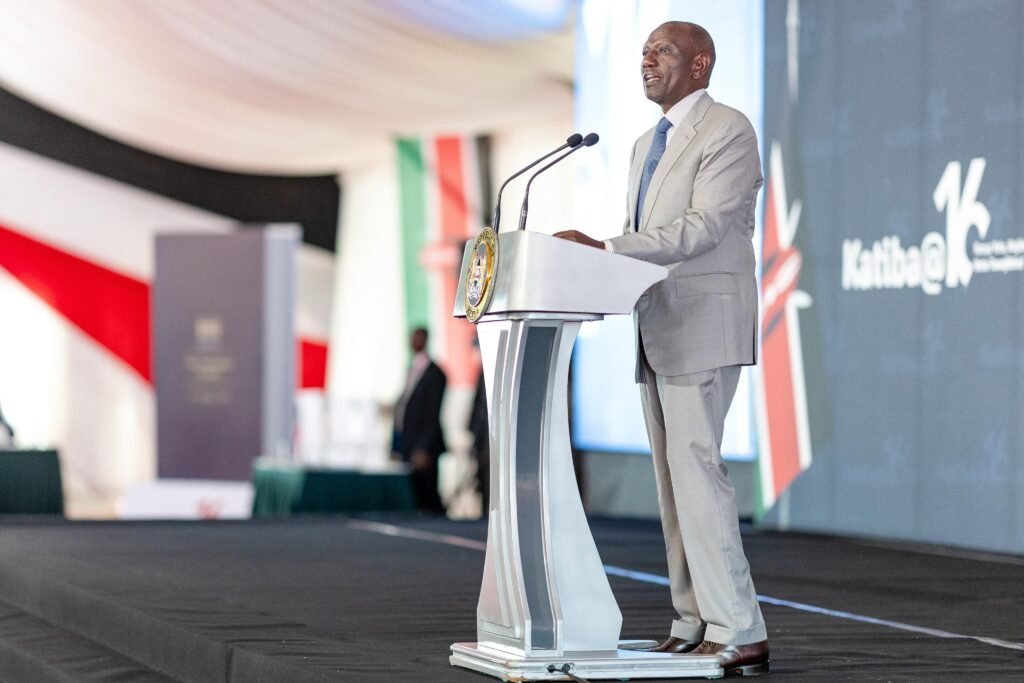
Ruto addresses Cabinet composition
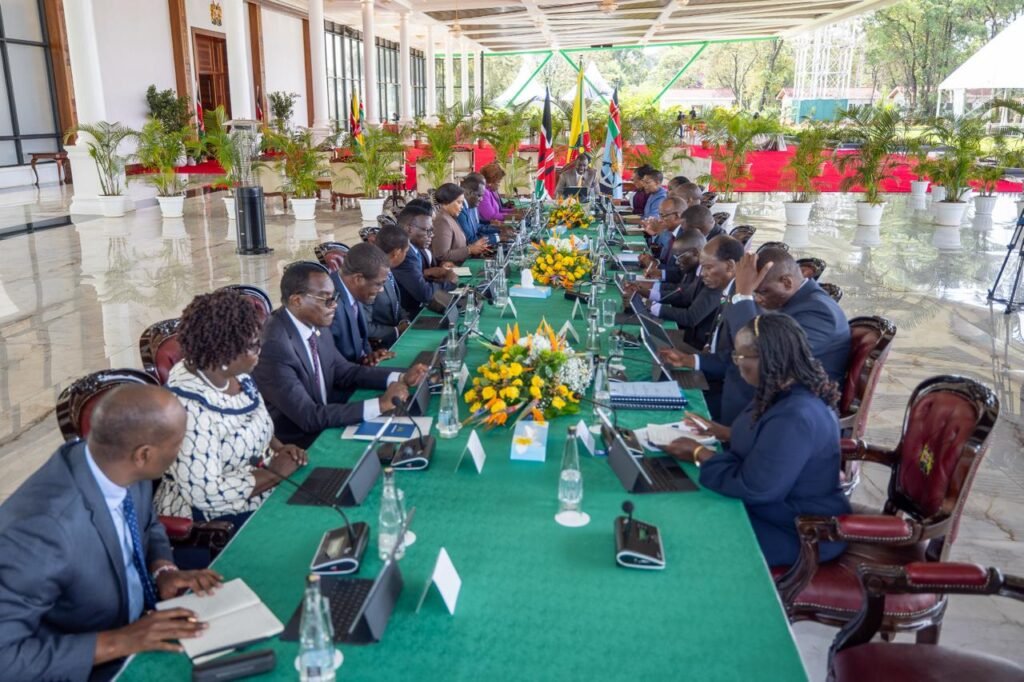
Ruto was also questioned about the constitutional status of his Cabinet in relation to the two-thirds gender principle.
The President said his administration had attempted to address the issue and that the matter remained before Parliament.
“I did make proposals to Parliament myself on how we could attain the two-thirds gender rule. It is still work in progress in Parliament, and I think progressively, without being too aggressive with ourselves, that is work in progress,” he said.
The Constitution requires the State to take legislative and other measures to ensure that no more than two-thirds of the members of elective or appointive bodies are of the same gender.
Ruto’s comments came as Kenya marked 16 years since the promulgation of the 2010 Constitution, with the symposium focusing on constitutionalism, governance, accountability and the relationship between different arms of government.
President reaffirms respect for the Constitution
Ruto said he was conscious of the constitutional responsibilities attached to the presidency, particularly the oath he took when assuming office.
“I am fully conscious of the oath that I took to preserve and defend the Constitution,” he said.
He described the oath as a serious undertaking rather than a ceremonial requirement, saying it obliges the President to account for the exercise of executive authority.
Ruto also linked his constitutional responsibilities to the promises contained in his 2022 campaign manifesto.
“When we seek a mandate like the way I did, I made commitments to the people of Kenya and those commitments were not just statements,” he said.
Ruto says courts must be respected
The President reiterated his position that judicial independence is essential to Kenya’s constitutional order.
He said courts must be free to interpret the Constitution, protect individual rights and invalidate government actions that are unlawful.
“Where government acts unlawfully, it must obey the courts and correct its course,” Ruto said.
At the same time, he argued that elected institutions should retain room to implement policies that fall within their constitutional mandate.
Ruto said Kenya’s constitutional framework performs two important functions: restraining the exercise of power while also providing a framework through which power can be exercised.
“Our constitution performs two equally important principles. First, it restrains power. It shares authority, establishes checks and balances, protects fundamental freedoms, and provides remedies against abuse. Second, it manages power,” he said.


