




NAIROBI, Kenya — Lawyer Willis Evans Otieno has questioned the terms of the agreement between the Kenyan government and Dangote Group over the proposed Lamu refinery, saying Kenyans should be allowed to examine the deal if it contains concessions involving community land and tax exemptions.
Otieno raised the concerns on Friday as the debate over access to the agreement intensified following President William Ruto’s refusal to release the document.
Otieno alleged that ancestral communal land in Chandavai and Magogoni valued at more than Sh50 billion could have been included in the arrangement without compensation to the affected community.
“Dangote cannot be handed ancestral communal land in Chandavai and Magogoni allegedly valued at more than Sh50 billion for free and with sweeping tax exemptions, while the indigenous community is pushed off its land without compensation,” Otieno said.
He, however, framed the allegations conditionally, saying the public should be allowed to establish whether such terms are actually contained in the government-Dangote agreement.
“If these terms are indeed part of the agreement, Kenyans deserve to see the deal and understand exactly what the State has given away,” he said.
Dispute Over Access To Dangote Agreement
Otieno’s remarks come a day after Sifuna invoked Article 35 of the Constitution, arguing that Kenyans have a right to access information held by the State and that important information affecting the country should be published.
Sifuna’s demand followed Ruto’s directive that those seeking the agreement should use parliamentary procedures to obtain it. Ruto also accused Sifuna and others of seeking to frustrate or extort Dangote, allegations the senator has rejected.
The disagreement has placed the terms of the refinery investment under renewed public scrutiny, although the full contents of the agreement have not been publicly established in the available reporting.
Sifuna previously told the Senate that lawmakers had not seen the agreement or been briefed on the commitments Kenya had made to facilitate the project.
Lamu Residents Challenge Land Issues
The debate comes amid a separate court case filed by 133 Chandavai residents over land earmarked for the refinery.
The residents have challenged activities on LR No. 13061 in the Hindi/Manda Magogoni area, saying their families have occupied, cultivated and developed the land for generations.
The Malindi Environment and Land Court has ordered the prevailing status quo on the disputed parcel to be maintained until October 14, 2026, when the application is scheduled for an inter partes hearing.
The residents have raised concerns over land ownership, compensation, public participation and environmental requirements. They have also asked the court to recognise occupants with compensable interests and require valuation and compensation before possession.
Government Defends Refinery Investment
The President has said the government will support the investment and has pointed to parliamentary and legal channels for those seeking to scrutinise the agreement.
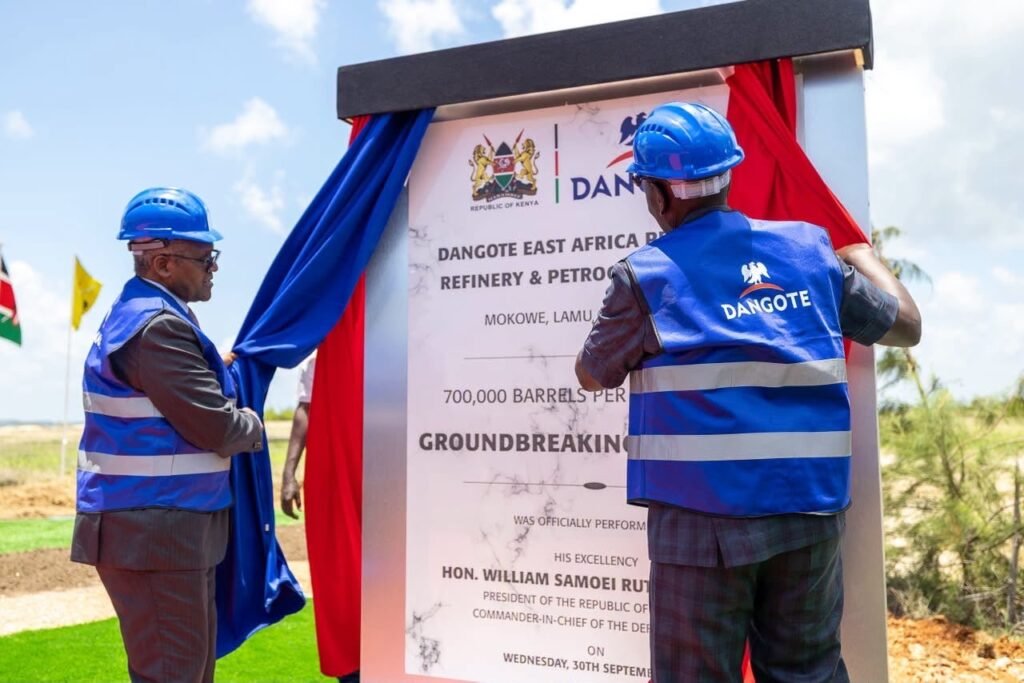
The refinery broke ground in Lamu on September 30, with Dangote Group maintaining that the project will proceed despite the land dispute, although the court orders could affect some activities at the site.
Otieno said the central issue should be whether the investment creates value for Kenya while protecting the rights of communities affected by the project.
“Investment must create value for Kenya, not turn community land into a free gift while its owners are left dispossessed,” he said.



