




WASHINGTON, United States — Former FBI Director James Comey has been charged with allegedly threatening the life of US President Donald Trump, in a case stemming from a social media post featuring an image of seashells arranged in the numbers “86 47”.
Federal prosecutors say the post, shared on Instagram last year, amounted to a threat against Trump, who is the 47th President of the United States. The term “86” is slang commonly interpreted as “remove” or “eject,” though Comey has denied any malicious intent.
Comey has maintained that he did not understand the meaning of the numbers when he posted the image and has rejected claims that it was intended as a threat.
“I’m still innocent, I’m still not afraid, and I still believe in the independent federal judiciary,” Comey said following the announcement of charges on Tuesday.
He faces two counts: making a threat against the President of the United States and transmitting a threat in interstate commerce. Each charge carries a maximum sentence of up to 10 years in prison.
The indictment was filed in the Eastern District of North Carolina, where authorities say the seashell image was originally taken.
US prosecutors allege that Comey, as a former FBI Director, understood the implications of the post and the attention it would attract.
FBI Director Kash Patel strongly defended the charges, accusing Comey of encouraging a threat against the President.
“James Comey disgracefully encouraged a threat on President Trump’s life and posted it on Instagram for the world to see,” Patel said.
Acting Attorney General Todd Blanche also described the alleged conduct as a serious violation of US law.
“Threatening the life of the President of the United States is a grave violation of our nation’s laws,” Blanche said, confirming that a grand jury had returned an indictment.
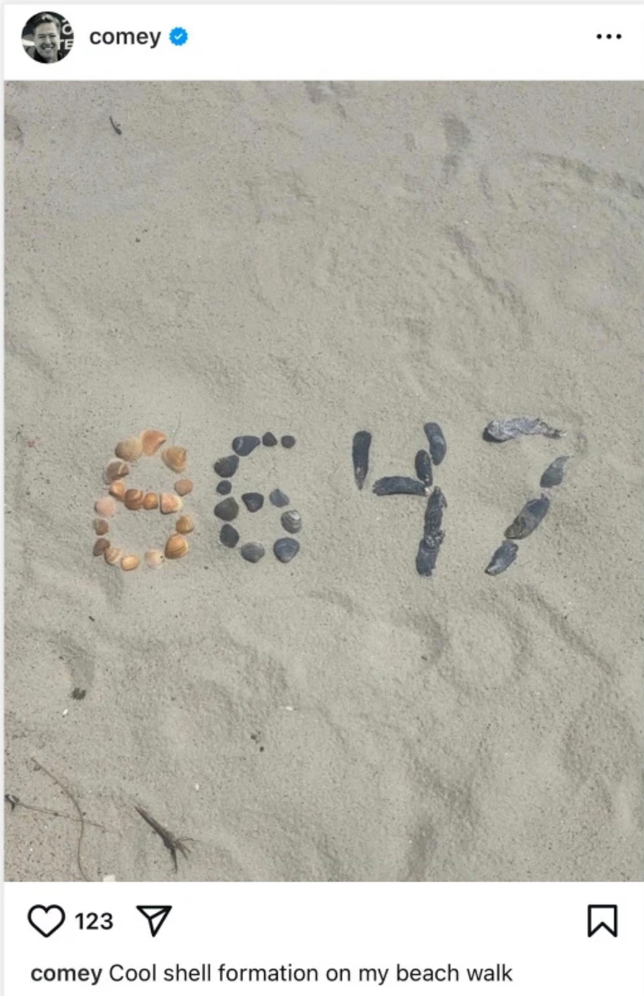
Comey, however, has insisted the post was misinterpreted and has no connection to violence. He deleted the image after questions arose about its meaning, later stating that he believed it represented a political message.
“I didn’t realise some folks associate those numbers with violence,” he said. “It never occurred to me but I oppose violence of any kind so I took the post down.”
The case has drawn sharp political and legal debate in the United States, with critics arguing that the indictment may be weak and raises questions about prosecutorial independence.
Some legal scholars have suggested the post could fall under protected free speech under the First Amendment, while others argue intent will be central in determining whether it constitutes a criminal threat.
The case also revives longstanding tensions between Trump and Comey, who was dismissed as FBI Director during Trump’s first term amid investigations into Russian interference in the 2016 election.
Comey has previously faced legal scrutiny, including a separate indictment related to congressional testimony, which was later dismissed due to procedural issues involving the appointment of the prosecuting attorney.

