




NAIROBI, Kenya – Prime Cabinet Secretary Musalia Mudavadi has reaffirmed the government’s commitment to working with the United Nations and other partners to ensure Kenya holds a transparent, credible, and peaceful general election in 2027.
Mudavadi, who also serves as Foreign and Diaspora Affairs Cabinet Secretary, said the government will maintain a hands-off approach to the operations of the Independent Electoral and Boundaries Commission (IEBC), emphasizing respect for its independence.
Speaking during a meeting with the United Nations Needs Assessment Mission (NAM) delegation led by Akinyemi Adegbola, the East Africa Division’s Principal Electoral Advisor, Mudavadi said Kenya is determined to safeguard its democratic progress and uphold the integrity of its electoral processes.
“Kenya will continue to consolidate its democratic gains. We are committed to fostering good governance and ensuring that our elections remain free, fair, and credible,” Mudavadi said at his Railways office in Nairobi.
He described the UN mission’s visit as a “critical step” in strengthening Kenya’s electoral preparedness and transparency, adding that the 2027 polls should reinforce Kenya’s reputation as a benchmark for credible elections in Africa.
Mudavadi also urged the delegation to factor in emerging challenges such as the influence of technology, social media, and artificial intelligence (AI) on elections when conducting their assessment.
“We must appreciate the evolving role of technology and social media in shaping public perception. Their potential impact on the 2027 elections cannot be ignored,” he said.

As a nation that continues to champion democracy in Africa, Kenya is deepening its collaboration with the United Nations and other partners to guarantee a transparent, credible, free, fair, and peaceful general election in 2027.During my meeting with Mr. Akinyemi Adegbola, the
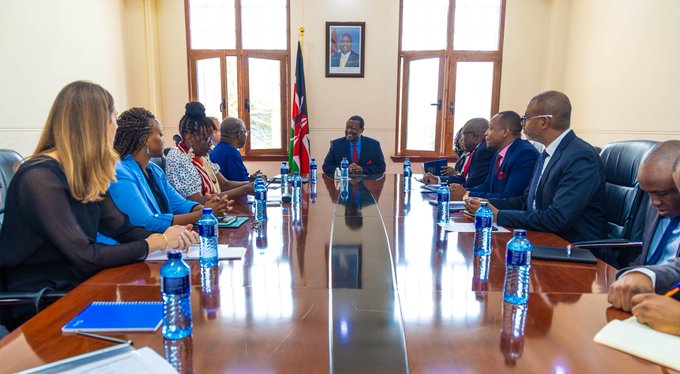

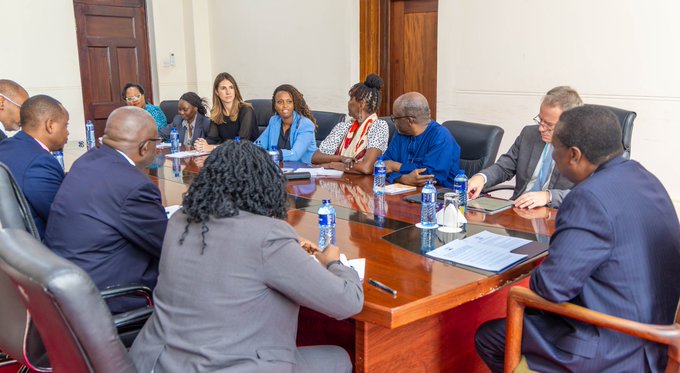

The UN assessment follows a formal request by the IEBC through its chairperson, Erastus Ethekon, last month.
The mission is tasked with evaluating Kenya’s electoral landscape and advising on the appropriate scope and modalities of UN support ahead of the polls.
Mudavadi assured the team that the government will provide full logistical and institutional support to ensure successful elections, while avoiding interference with IEBC’s mandate.
He also called for early coordination among electoral stakeholders, including faith-based organisations, civil society groups, the judiciary, and security agencies, to foster trust and preparedness ahead of the polls.
On his part, Adegbola said the UN team will conduct its work with “modesty and sensitivity” to Kenya’s political context.
“We always approach our engagement with care, ensuring that our assessment responds to real issues without overstepping into political dynamics,” Adegbola said, adding that UN electoral assistance in Kenya has progressively focused on specific technical areas rather than logistics.
The NAM team’s recommendations are expected to guide future UN support for Kenya’s electoral institutions as the country prepares for the 2027 vote.


