




CALIFORNIA, United States — NASA has declared the Artemis II mission a major success after its crew safely returned to Earth, marking humanity’s first journey to the vicinity of the Moon in more than 50 years.
The mission, conducted by NASA, saw the Orion capsule—named Integrity—splash down in the Pacific Ocean off the Southern California coast on Friday, April 10, after nearly 10 days in space. The spacecraft completed its descent shortly after 5:07 p.m. Pacific Time, ending a high-stakes test flight designed to pave the way for future lunar landings.
The four-member crew travelled a total of 694,392 miles (1,117,515 km), including two Earth orbits and a close lunar flyby that brought them within approximately 4,000 miles of the Moon’s surface. At its furthest point, the mission reached 252,756 miles from Earth—deeper into space than any human mission in decades.
NASA officials described the mission as a “fantastic feat,” emphasising that it demonstrated the agency’s readiness to safely conduct crewed deep-space missions under the Artemis program.
“The biggest objective of this mission was to prove to ourselves that we could move to crewed flight, but maintain the same level of risk knowledge and understanding,” said Amit Kshatriya during a post-mission briefing.
The Artemis II mission is the first crewed test flight in NASA’s Artemis series, which aims to return humans to the Moon and establish a sustainable presence there. Unlike its predecessor, Artemis I—which was uncrewed—this mission tested life-support systems, navigation, and crew operations in deep space.
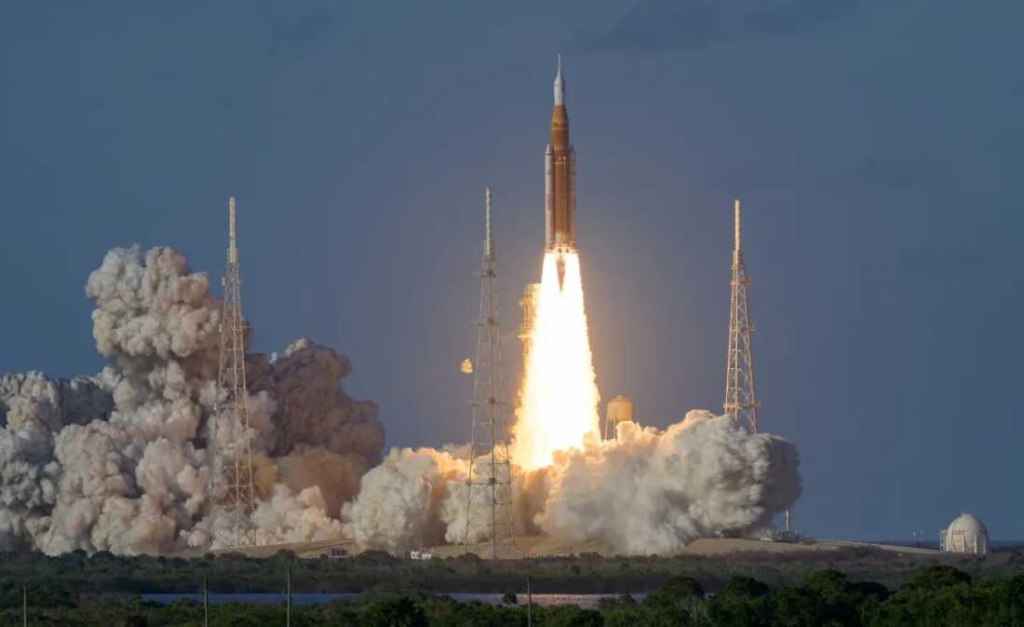
Officials credited the success to extensive preparation and coordination across engineering, operations, and astronaut teams. “Teamwork contributed significantly to mission success,” NASA said, highlighting the complexity of executing a human-rated mission beyond low Earth orbit.
The safe return of the Orion capsule is seen as a critical step toward Artemis III, which is expected to land astronauts on the lunar surface as early as 2028.
The Artemis programme is also designed to support long-term goals, including the establishment of lunar infrastructure and eventual human missions to Mars. Analysts say Artemis II’s success strengthens confidence in NASA’s timeline, though significant technical and financial challenges remain.
With the crew now safely back on Earth, NASA is expected to conduct a detailed post-flight analysis to refine systems ahead of the next phase of lunar exploration.


