




NAIROBI, Kenya – KEMSA has raised its order fill rate from about 40 per cent in 2022 to more than 90 per cent, marking a major turnaround in the availability of medicines and health products in Kenya’s public health facilities.
The Kenya Medical Supplies Authority (KEMSA) says the improvement has not been driven simply by buying and distributing more commodities.
Instead, the authority has redesigned its supply-chain model around demand forecasting, efficiency, predictability, technology and data, seeking to ensure the right Health Products and Technologies (HPTs) are available at the right facilities when they are needed.
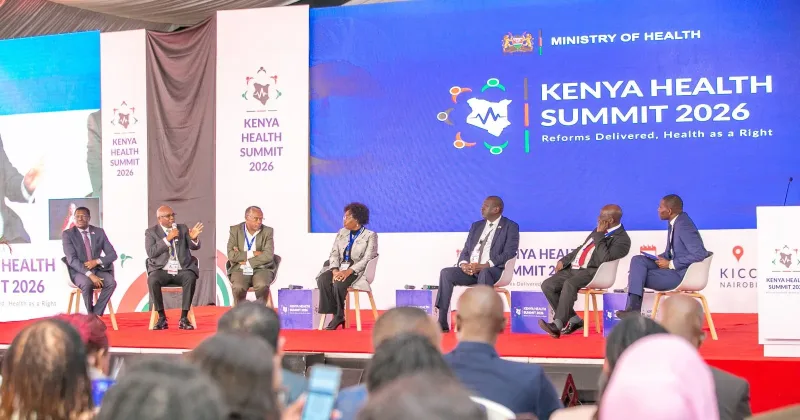
KEMSA CEO Dr Waqo Ejersa outlined the reforms during a high-level Health Systems Performance session at the Kenya Health Summit, focusing on service delivery, the health workforce, health products and technologies, and local manufacturing.
The session was chaired by Health Cabinet Secretary Aden Duale and moderated by Principal Secretary for Medical Services Dr Ouma Oluga.
KEMSA shifts from supply to demand
Dr Waqo said the first step was to engage health-sector stakeholders and establish what facilities actually needed.
“We called our stakeholders to help us decide what they need,” he said.
The approach represented a shift from simply managing nearly 3,800 Stock Keeping Units (SKUs) to understanding demand across the health system and prioritising critical medicines and health products.
KEMSA also discovered through a national dialogue that it was holding substantial quantities of stock despite operating with limited resources.
The authority subsequently adopted what it calls a “shrink and grow” strategy.
Under the approach, KEMSA seeks to reduce unnecessary inventory while strategically increasing the availability of commodities where demand is highest.
The aim is to improve efficiency without compromising access to essential products.
Two-year contracts bring predictability
KEMSA has also introduced two-year framework contracts as part of efforts to make procurement more predictable.
The longer-term arrangements are intended to give suppliers greater certainty while helping the authority maintain a more consistent flow of health products.
Dr Waqo said the broader objective was to move away from reactive procurement towards a system capable of anticipating demand and reducing the risk of stockouts.
That shift is particularly important for essential medicines, where shortages can directly affect patient care and put additional pressure on health facilities.
Technology at centre of reforms
Technology has become another major component of KEMSA’s transformation.
Through CEWAS, the authority is improving commodity stocking and visibility, allowing it to make more informed decisions about what products to stock, where to position them and when to replenish supplies.
The digital systems are designed to make the supply chain more responsive and data-driven rather than waiting for shortages to emerge before taking action.
The increased use of data is also expected to improve forecasting and reduce inefficiencies associated with holding excess stock or procuring commodities without sufficiently understanding demand.
Kindiki highlights turnaround
The progress was highlighted by Deputy President Kithure Kindiki during the summit.
Speaking on health commodity security and logistics, Kindiki said KEMSA, which he described as having been “in disarray” in 2022, had recorded significant improvements.
He pointed to the rise in the order fill rate from about 40 per cent to more than 90 per cent as evidence of the turnaround.
However, the Deputy President cautioned that the gains must be consolidated through further reforms to Kenya’s health commodity security system.
Kindiki called for the Logistics Management Information System to be made interoperable with other government systems to improve the quality, accessibility and use of supply-chain data.
The proposal aligns with the government’s wider digitisation agenda and reflects the increasing importance of integrated data in managing health commodities.
Governors and health leaders join discussion
The health-systems session brought together national and county government leaders as well as representatives of the private and faith-based health sectors.
Participants included Tharaka Nithi Governor Muthomi Njuki, Makueni Governor Mutula Kilonzo, Healthcare Federation Chairman Dr Kanyenje Gakombe, AGC Tenwek CEO Ben Siele and Kenyatta National Hospital CEO Dr Richard Lesiyampe.
Their participation underscored the importance of coordination between national agencies, counties, healthcare providers and suppliers in strengthening the health-product supply chain.
For counties and public facilities, a more predictable supply system could reduce the disruptions caused by medicine shortages and improve planning for patient services.

