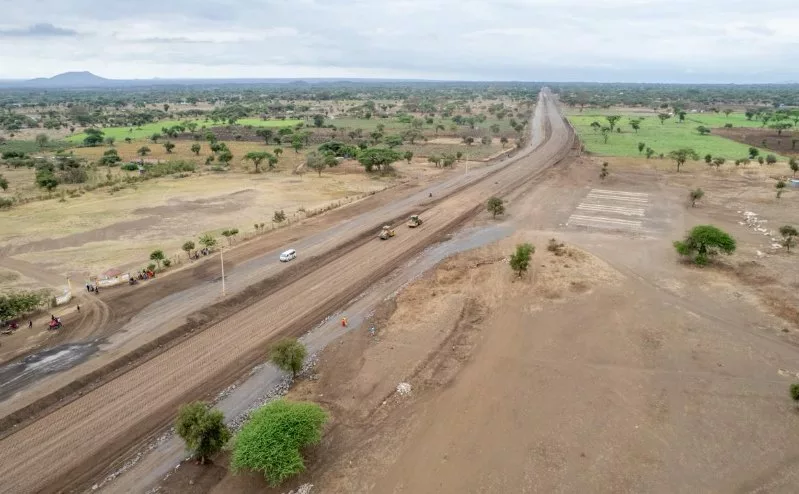
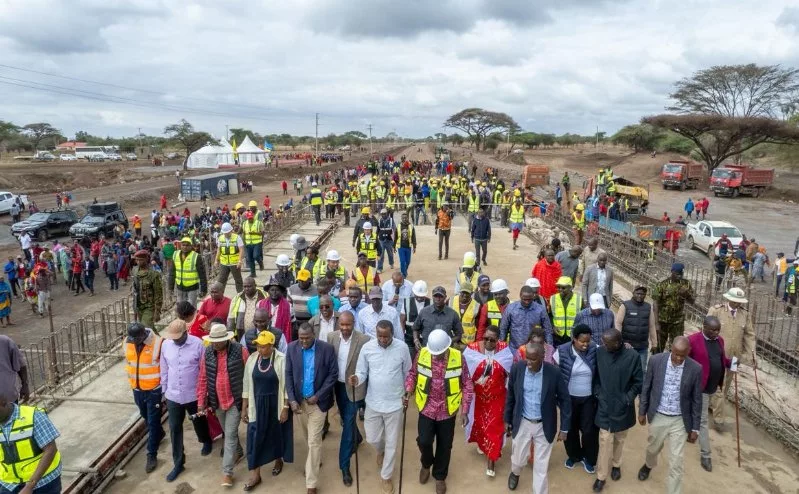
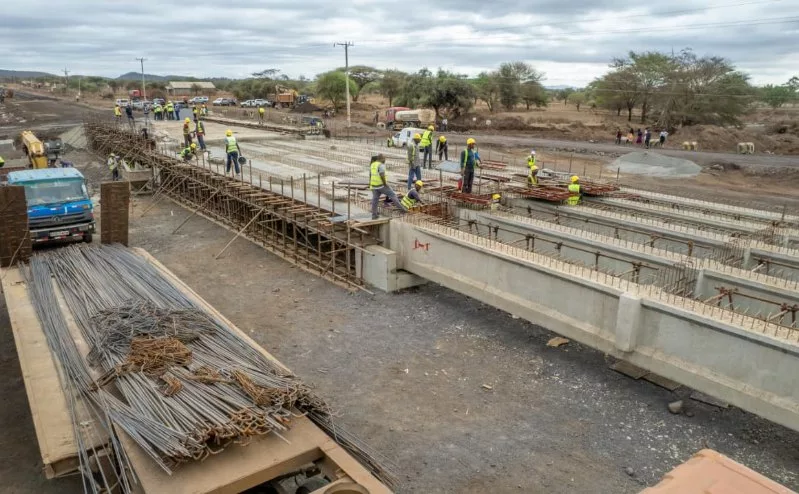
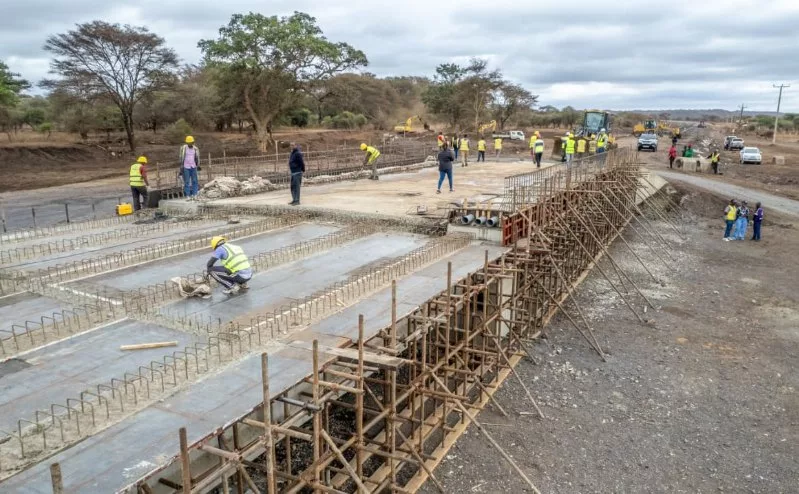
NAIROBI, Kenya — President William Ruto on Thursday inspected the ongoing construction of Rombo Bridge in Kajiado South as the government stepped up implementation of a Sh9.4 billion road project expected to improve transport and trade between Kajiado and Taita Taveta counties.
Ruto’s inspection began in Rombo, where he assessed progress on the Rombo-Taveta Road and the bridge forming part of the wider infrastructure project.
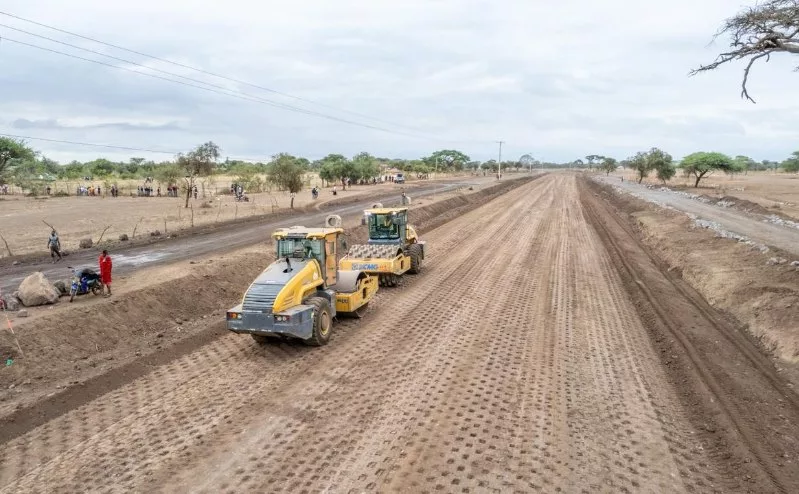
The Rombo Bridge is being constructed under the Illasit-Rombo-Njukini-Taveta road development project, which covers approximately 65 kilometres and is intended to improve connectivity between communities in Kajiado and Taita Taveta.
Road project targets regional connectivity
The project will connect Illasit, Rombo, Njukini and Taveta, creating a more direct transport corridor between the two counties.
The government expects the improved road network to strengthen the movement of people and goods while opening up better access to markets on both sides of the county border.
Once completed, the road and bridge infrastructure is expected to facilitate regional trade by making it easier to transport agricultural and livestock products to commercial centres.
The improved road surface and bridge infrastructure are also expected to reduce travel times along the corridor.
Journey time expected to fall
The government has projected that travel between Illasit and Taveta could be reduced from about two hours to less than 45 minutes once the project is completed.
The shorter journey is expected to benefit motorists, traders and residents who rely on the route to access markets and services.
For businesses operating along the corridor, improved connectivity could also lower vehicle operating and transportation costs while increasing access to customers and suppliers.
Farmers and livestock keepers set to benefit
The road passes through communities where pastoralism and agriculture are important sources of livelihoods.
Better transport infrastructure is expected to make it easier for livestock keepers and farmers to move animals and agricultural produce to markets.
Reduced travel times could also help traders reach larger markets and improve the efficiency of supply chains serving communities in the two counties.
The government expects the project to strengthen economic activity in towns and trading centres along the route by improving their links to major markets.
Improved access to essential services
The benefits of the project are expected to extend beyond trade and transportation.
Improved roads and bridges could make it easier for residents of rural settlements to reach schools, health facilities, markets and other essential services.
Communities located along the corridor are also expected to benefit from improved mobility, particularly during periods when poor road conditions can make travel difficult.