




LYON, France – Interpol has announced the arrest of 5,811 suspects and the interception of $293 million (approximately KSh37.9 billion) in illicit assets following a global crackdown on internet-enabled fraud conducted across 97 countries.
The operation, dubbed Operation First Light 2026, ran from January 15 to April 30 and targeted social engineering scams, cyber-enabled financial crimes and related money laundering networks.
According to Interpol, social engineering scams rely on manipulating victims into voluntarily disclosing confidential information or transferring money. The schemes include business email compromise, romance scams, investment fraud, sextortion and impersonation scams.
Following months of intelligence gathering and information sharing, participating countries conducted coordinated enforcement actions, including raids on suspected criminal premises, arrests of high-value targets, freezing bank accounts and cryptocurrency wallets, and the use of Interpol’s Global Rapid Intervention of Payments (I-GRIP) system to halt suspicious financial transactions.
The international police organization said the operation analysed 152,808 cases, solved 23,715 investigations, identified 15,606 suspects, blocked 31,014 bank accounts, and issued 99 Interpol Notices and Diffusions to support cross-border investigations.
Authorities also identified more than 142,000 victims worldwide, highlighting the growing scale of cyber-enabled fraud targeting individuals, businesses and public institutions.
“Social engineering scams continue to pose a significant threat to our society. Criminal syndicates exploit human psychology to manipulate their targets, and no nation can stay safe unless all countries are equipped and committed to jointly fighting back,” said Tomonobu Kaya, Director of Interpol’s Financial Crime and Anti-Corruption Centre.
He added that Interpol remains committed to helping member countries strengthen coordinated responses to cyber-enabled financial crime, organized criminal networks and money laundering.

Major operations across participating countries
Interpol highlighted several notable enforcement actions during the operation.
In Eswatini, police arrested 82 suspects and dismantled a criminal network allegedly involved in illegal online gambling, money laundering and impersonation scams. Interpol deployed an Operational Support Team to assist with forensic analysis of digital evidence seized during the raids.
In Thailand, investigators arrested two suspects linked to a sophisticated money laundering operation that converted proceeds from romance scams into cryptocurrencies using cross-chain token swaps. Police said one suspect’s digital wallet processed more than $122.5 million (about Sh15.8 billion) within 10 months.
Authorities in Singapore and Oman successfully used the I-GRIP payment intervention system to block an illicit transfer worth $6.6 million (approximately Sh853 million) linked to a business email compromise scheme targeting a Singapore-based commodity trading company.
Meanwhile, police in Macao, China, prevented a victim from transferring nearly $372,000 (about Sh48.1 million) after identifying an ongoing impersonation scam during a public anti-fraud awareness campaign.
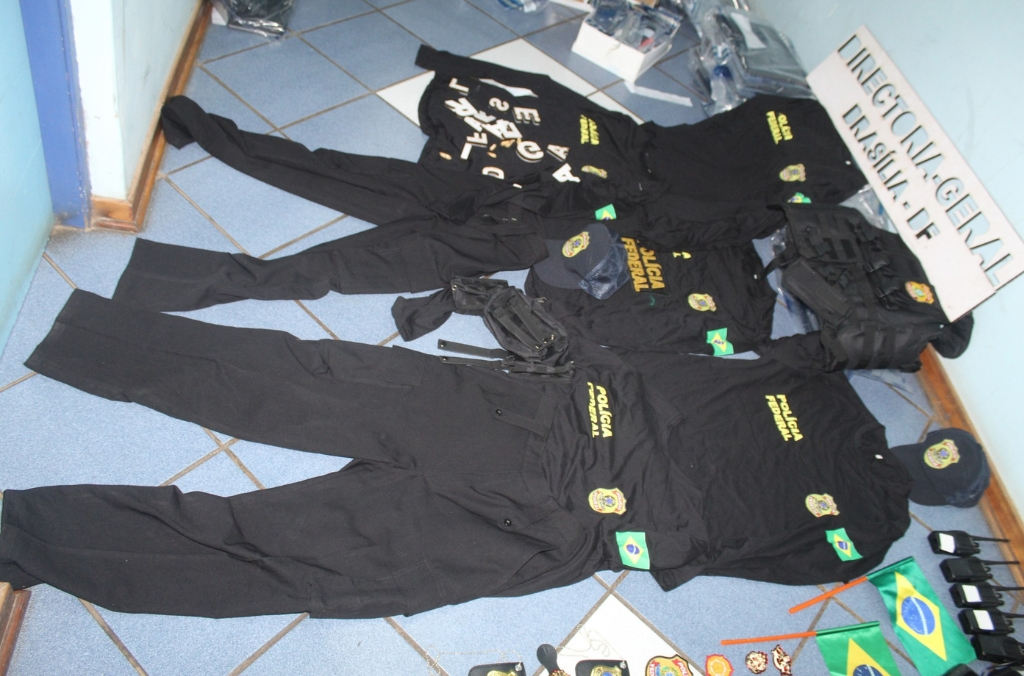
In Brazil, investigators seized 240 electronic devices, foreign currency and a replica police station complete with fake uniforms, signage and equipment. According to Interpol, suspects allegedly impersonated Brazilian Federal Police officers during video calls to convince victims to transfer funds for purported “safekeeping.”
The operation also involved law enforcement agencies from Tanzania, Ghana, Nigeria, South Africa, South Sudan, Rwanda, Zambia, Zimbabwe, Libya, the United Arab Emirates (UAE), Myanmar and several other countries as authorities intensify international cooperation against increasingly sophisticated online fraud networks.

