




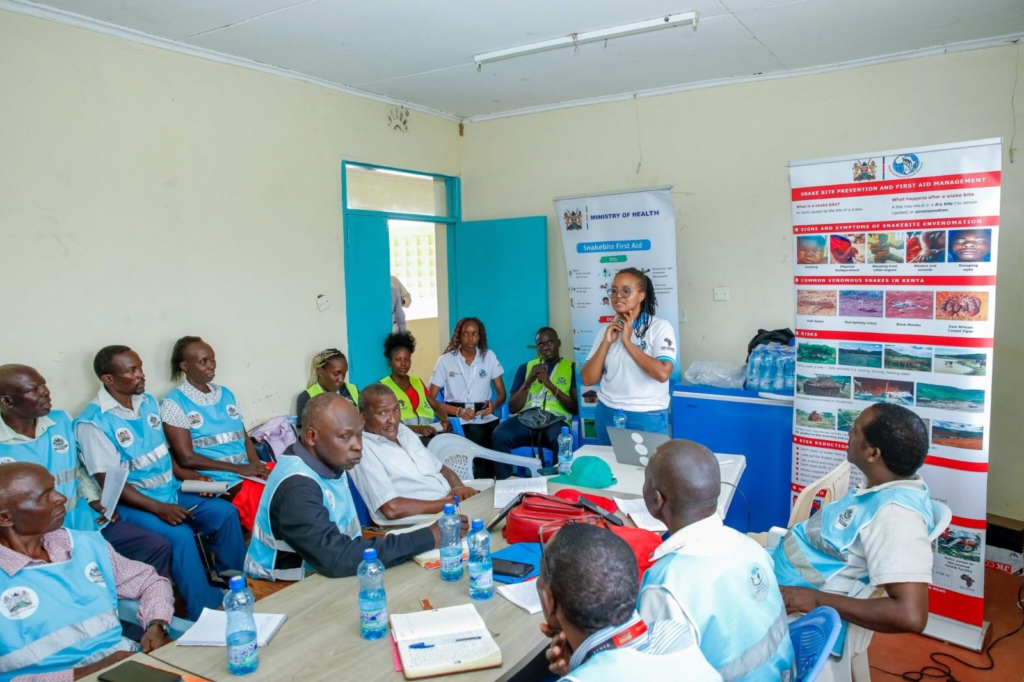
NAIROBI, Kenya — The Ministry of Health has launched a countywide snakebite hotspot mapping exercise in Kirinyaga County as part of efforts to develop an affordable, locally produced antivenom tailored to Kenya’s indigenous snake species.
The initiative is being implemented by the State Department for Public Health and Professional Standards through the Kenya Institute of Primate Research (KIPRE) and the Kenya Snakebite Research and Intervention Centre (K-SRIC) in collaboration with the County Government of Kirinyaga.
The exercise aims to establish the burden and geographical distribution of snakebite incidents across the county by collecting data on areas most affected by snakebites.
According to the Ministry of Health, the information gathered will strengthen snakebite prevention strategies, improve clinical case management, guide the strategic distribution of antivenom and enhance disease surveillance and referral systems.
The ministry said the findings will also support the development of a locally manufactured antivenom designed specifically for Kenya’s snake species, helping improve treatment outcomes while reducing the cost of lifesaving medication.
Officials noted that the mapping exercise will provide an evidence base for planning and resource allocation, enabling health authorities to strengthen preparedness and response to snakebite incidents in vulnerable communities.

