




AUSTIN, United States — Tech billionaire Elon Musk has announced a new ambitious venture dubbed “Terafab,” a project aimed at manufacturing advanced chips for artificial intelligence, robotics, and data centres—both on Earth and eventually in space.
The initiative will be jointly run by Tesla and SpaceX, with a primary manufacturing facility planned near Austin, Texas. Musk said the plant would target the production of up to one terawatt of computing power annually—a scale approaching the total electricity generation capacity of the United States.
“We’re very grateful to our existing supply chain… but there’s a maximum rate at which they’re comfortable expanding,” Musk said, referencing current partners such as Samsung, TSMC and Micron Technology. “That rate is much less than we would like… and we need the chips, so we’re going to build the Terafab.”
Although Musk did not disclose the initial investment, previous media estimates have placed the project’s cost between $20 billion and $25 billion, signalling one of the largest private bets yet in the semiconductor sector.
The proposed “advanced technology fab” will integrate the full chip production cycle, including design, manufacturing, testing, and iterative improvement—an approach intended to reduce reliance on external suppliers and accelerate innovation.
The move comes amid surging global demand for AI chips, driven by rapid advances in machine learning, autonomous systems, and large-scale data processing.
Tesla’s ambitions in self-driving technology and robotics, alongside SpaceX’s satellite and deep-space projects, have significantly increased the need for high-performance computing infrastructure.
Despite Musk’s lack of direct experience in semiconductor manufacturing, analysts note that vertical integration—bringing production in-house—has become a growing trend among major tech firms seeking supply chain control and competitive advantage.
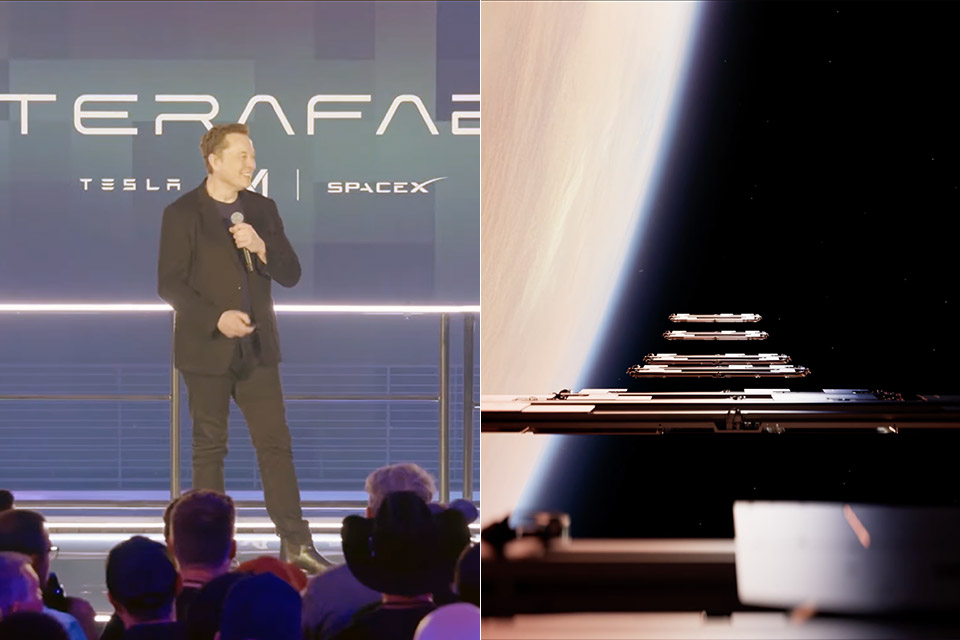
In the longer term, Musk said Terafab could support between 100 and 200 gigawatts of computing power on Earth, with a far more ambitious goal of generating up to a terawatt of computing capacity in space. Such capabilities, he argued, would be essential for humanity’s expansion beyond Earth.
He framed the project within his broader vision of turning humanity into a “galactic civilization,” capable of harnessing resources from other planets and star systems—a long-standing theme in SpaceX’s mission.
However, Musk did not provide a clear timeline for delivery, and his track record of setting aggressive deadlines has often drawn scepticism from industry observers.


