




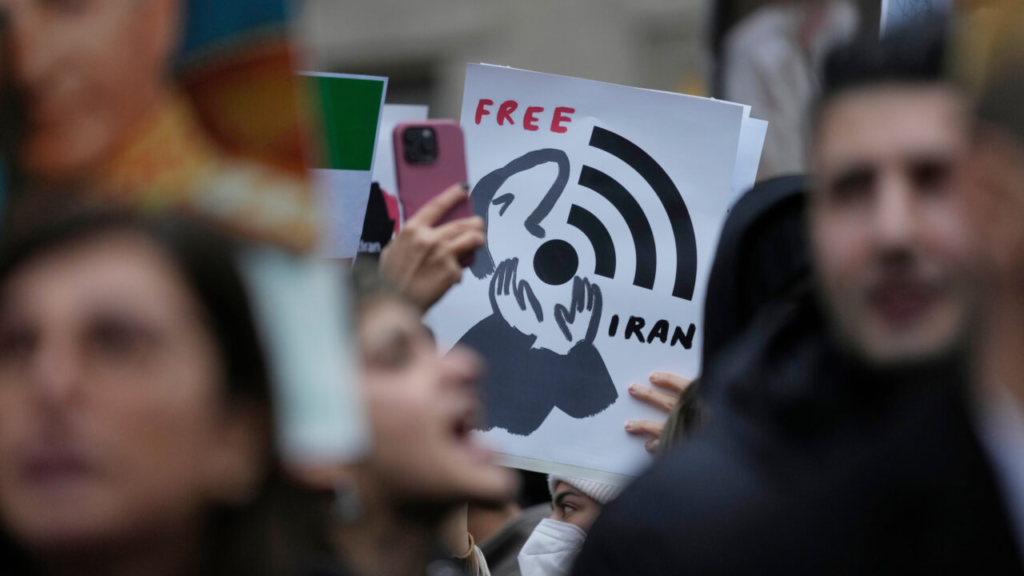
TEHRAN, Iran — Growing numbers of Iranians are criticising a government-backed “Pro Internet” system that grants limited online access to select professionals and businesses during one of the country’s longest internet shutdowns.
The restrictions were imposed after the outbreak of war involving Iran, Israel, and the United States on February 28, leaving millions largely cut off from the global internet.
Monitoring group NetBlocks said by April 5 the disruption had become “the longest nation-scale internet shutdown on record in any country.”
Under the blackout, most users have only been able to access limited domestic websites, banking platforms, and state-approved applications. Authorities have argued that the restrictions were necessary for national security during wartime conditions.
However, the introduction of the paid “Pro Internet” service has sparked accusations that the government is creating a two-tier digital system in which broader connectivity is reserved for privileged groups.
Amir-Hassan, a 39-year-old technology worker, said he subscribed to the service after receiving an invitation message because he needed internet access to continue earning a living.
“It was out of necessity. I was forced to get internet so I could ensure the flow of my income,” he told AFP.
He said he paid about $11 for an initial 50-gigabyte package, but criticised the system as expensive and unfair.
“This model of categorising and classifying the internet in Iran is not a good model,” he said. “It is clearly meant to generate money.”
Users report that the service allows access to platforms such as WhatsApp and Telegram but still restricts major international websites and applications, including Instagram, X, and YouTube, unless users rely on virtual private networks (VPNs).
The uneven rollout has also generated frustration among professionals who were not granted access despite being in targeted sectors.
Behrooz Mahmoodi-Bakhtiari, a professor at the University of Tehran, said he had not received an invitation to subscribe, unlike some of his colleagues.
“As soon as you step out of the university, you will again become a third-class citizen, and you have no internet access,” he said.
Iranian reformist newspaper Shargh and other media outlets have criticised the initiative as “tiered internet,” warning that internet access is being transformed “from a public and civic right into an allocable privilege.”
Government spokeswoman Fatemeh Mohajerani defended the restrictions, saying normal internet access would return “once the shadow of war is gone.” She blamed Israel and the United States for creating the security conditions that prompted the shutdown.
The internet restrictions come as Iran faces mounting economic pressure. Years of international sanctions, combined with wartime disruptions, have sharply worsened living conditions for many households.
Inflation has reportedly climbed above 50 P.c in recent weeks, while the Iranian rial has continued to weaken against the U.S. dollar, increasing the cost of basic goods and services.
Mehdi, a 34-year-old designer, said the data packages offered under the service were too costly for most people.
“The amount of data offered, in my view, is not economically worthwhile for users compared to the cost,” he said.
Another artist, Kaveh, rejected the offer entirely, arguing that citizens should not have to pay premium prices for restricted access to information.
“I would not pay for a little amount of freedom to some of us as a favour, at 10 times the normal price,” he said.
Digital rights advocates say the blackout highlights growing concerns over state control of online communications in Iran, particularly during periods of political unrest and armed conflict.



