




KAREN, Kenya – The strike, which began on July 29, has disrupted services in public hospitals nationwide as the government pushes for negotiations to resolve outstanding grievances.
Deputy President Kithure Kindiki has called on key stakeholders in the health sector to embrace dialogue and resolve the outstanding issues at the centre of the ongoing nurses’ strike to prevent further suffering among Kenyans seeking treatment.
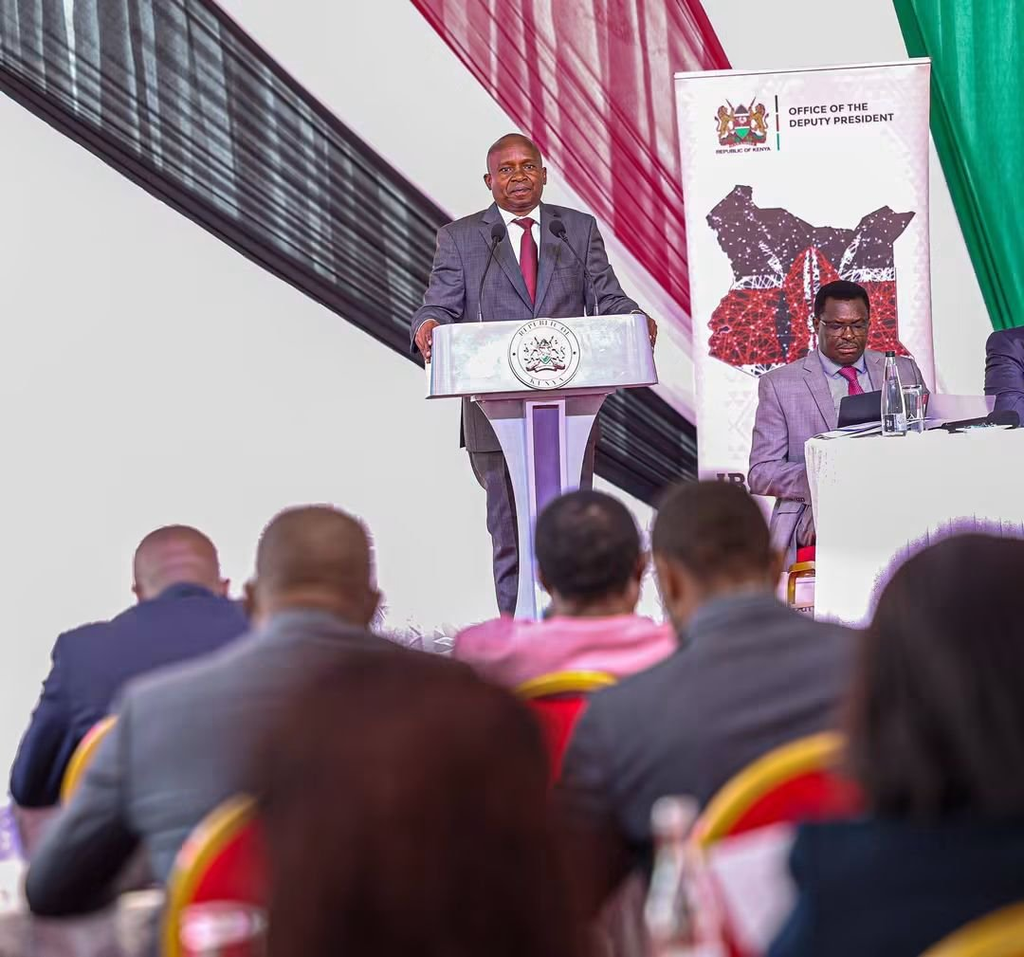
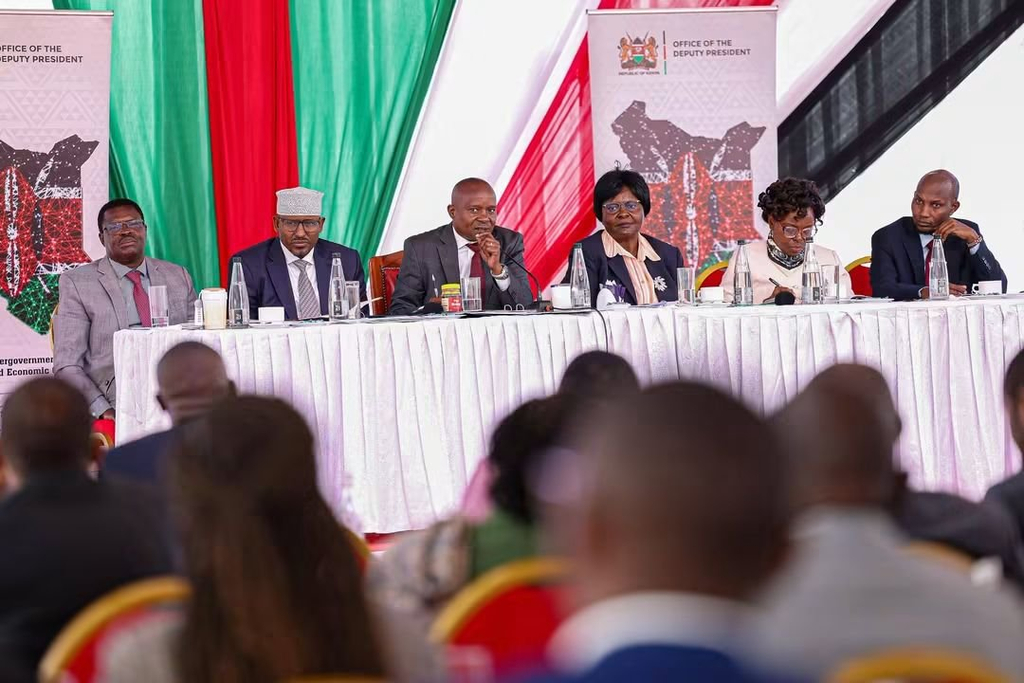
Speaking after chairing a special session of the Intergovernmental Budget and Economic Council (IBEC) on Monday, Kindiki urged the Council of Governors (CoG), the Kenya National Union of Nurses and Midwives (KNUNM) and the Salaries and Remuneration Commission (SRC) to conclude negotiations and facilitate the resumption of health services.
The nationwide strike began on July 29 after the expiry of a seven-day strike notice, disrupting services in public hospitals and health facilities across the country.
Public hospitals feel impact of strike
County hospitals and other public health facilities have faced severe shortages of nursing staff, affecting outpatient and inpatient services as well as specialised care.
Maternity services, deliveries and emergency response have also been disrupted, forcing some patients to seek treatment in private facilities or travel to referral hospitals where services remain available.
The disruption has placed additional pressure on major referral facilities, including Kenyatta National Hospital, as patients from counties where services have stalled seek alternative care.
“This industrial action has affected the smooth delivery of health services across the country. I wish to encourage the Council of Governors, in consultation with SRC, to conclude on the outstanding issues as soon as possible to facilitate resumption of services,” Kindiki said.
The Deputy President called on the Ministry of Health, CoG and SRC to intensify engagement with the nurses’ union and resolve the dispute.
“I am urging the Ministry of Health, the CoG and the SRC, to go out of their way, engage the union, and conclude that process because we don’t want disruptions in this sector,” he said.
What nurses want resolved
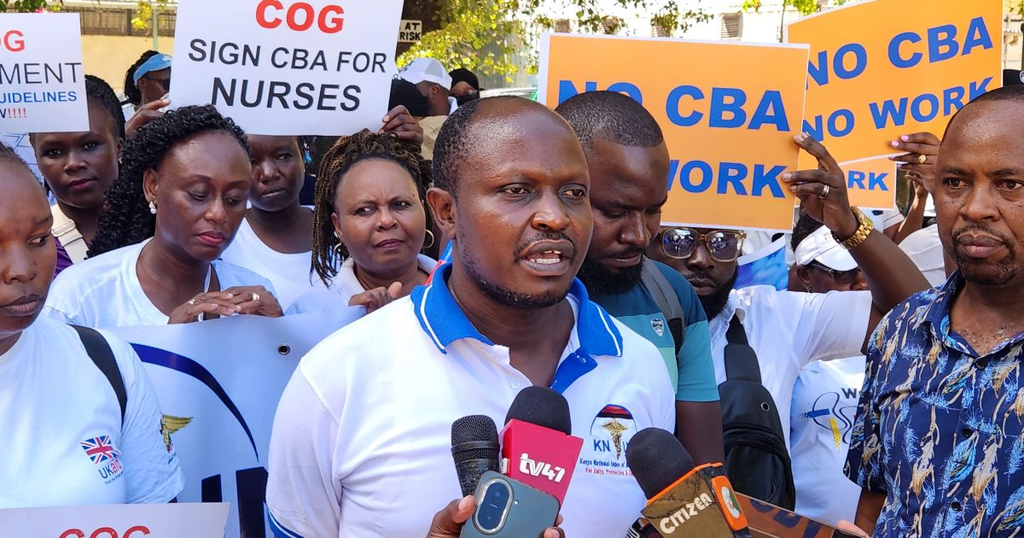
The strike is rooted in several unresolved employment grievances, including implementation of the 2017 return-to-work agreement, conclusion and implementation of the nurses’ Collective Bargaining Agreement (CBA), career progression guidelines and the absorption of Universal Health Coverage (UHC) workers into permanent and pensionable terms.
KNUNM has maintained that it is ready for constructive engagement but has insisted that outstanding agreements must be resolved before nurses return to work.
The union has identified the CBA as one of the key remaining hurdles in the dispute.
UHC workers to be absorbed
The IBEC meeting also resolved to fast-track the absorption of UHC workers into permanent and pensionable employment, in line with an agreement that the transition would take effect from July 1, 2026.
The Council resolved that the transition costs be provided for through County Governments Additional Allocations (CGAA) for the 2026/27 financial year.
Amounts already paid by the Ministry of Health for July and August will be accounted for under the CGAA and reimbursed to the ministry from September 1.
The Council further resolved that the Commission on Revenue Allocation’s revenue-sharing recommendation for the 2027/28 financial year should factor in personnel costs arising from the absorption of UHC workers.
The move is intended to ensure counties do not suffer a reduction in their equitable share because of the additional personnel costs.
The Ministry of Public Service, Human Capital Development and Special Programmes will facilitate the transfer of eligible workers’ payrolls to county governments, while County Public Service Boards will undertake their absorption.
The Public Service Commission will provide uniform guidelines to guide the process.
Taifa Care enrolment reaches 32 million
Kindiki also reported progress in the rollout of Universal Health Coverage under the Taifa Care programme, saying more than 32 million Kenyans had registered for the cover.
“It is not a small matter, the number of people on this programme already. We are almost achieving universality because once you hit 75 per cent, then you have a universal healthcare system,” he said.
According to Kindiki, about 20 million Kenyans have so far received outpatient treatment under the programme, while Sh178 billion has been disbursed by the Social Health Authority (SHA) to health facilities across the 47 counties.
He attributed the progress to cooperation between the national government, county governments and the CoG.
“I must thank the cooperation between the Council of Governors, the county governments and the national government because, without it, we would not have achieved the progress we have achieved so far,” Kindiki said.
Government reviews hospital equipment programme
The IBEC meeting also reviewed progress under the National Equipment Support Programme, which is equipping Level 4 and Level 5 hospitals with modern medical equipment before expanding its focus to Level 3 facilities.
Kindiki said the programme had been designed to avoid some of the challenges associated with the defunct Medical Equipment Scheme (MES).
“Borrowing from the experiences under the defunct Medical Equipment Scheme (MES), this programme is more sustainable because it is on the basis of a fee-for-service model,” he said.
Under the arrangement, equipment providers are responsible for installation, maintenance and consumables and are paid based on the use of the equipment.
“So there is no question of downtime because the person is paid on the basis of the use of that equipment,” Kindiki said.


