




NAIROBI, Kenya- The United States has reaffirmed its long-standing commitment to supporting Kenya’s health sector, announcing continued investments aimed at strengthening disease surveillance, emergency response systems and public health infrastructure.
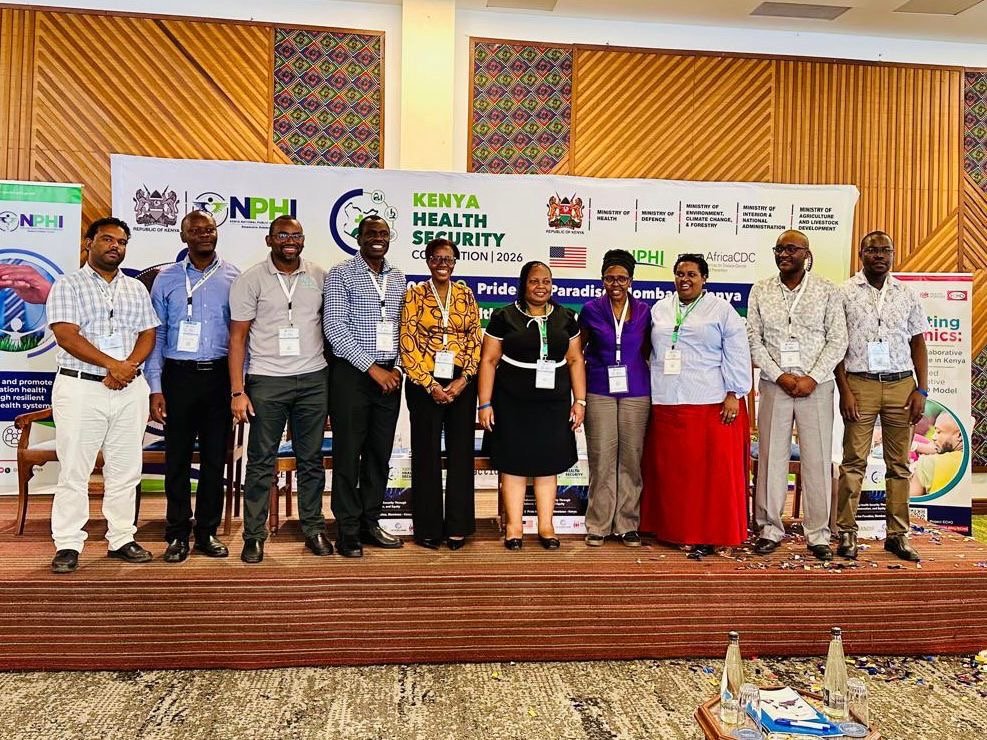
Speaking during the inaugural Kenya Health Security Convention in Mombasa, Naomi Lucchi said the US remains a committed ally in helping Kenya build resilient health systems capable of responding to emerging threats.
“Health security rarely makes headlines when it’s working. It becomes visible only in moments of crisis when outbreaks spread, systems are compromised and economies and national stability are threatened,” she said.
Dr Lucchi noted that the US government is investing approximately 290 million US dollars, equivalent to about Sh33.9 billion, in Kenya’s health programmes this year alone.
According to her, the funding supports HIV, tuberculosis, malaria, influenza, disease outbreak surveillance and maternal and child health programmes.
She revealed that through collaboration with the Kenyan government, over 1.3 million Kenyans living with HIV have access to lifesaving treatment, while more than 150,000 children have been born HIV-free.
Dr Lucchi also highlighted progress made in malaria control, saying prevalence rates reduced by 50 percent between 2010 and 2020.
“The United States has not abandoned health programmes in Kenya and we are working to do more,” she stated.
She further disclosed that under the US-Kenya Health Cooperation Framework, the US has committed approximately 1.6 billion US dollars, equivalent to about Sh206.5 billion, towards Kenya’s health sector, including significant support for global health security initiatives.
The CDC official said the investments have helped Kenya improve preparedness and response to outbreaks such as mpox and Marburg through strengthened laboratory networks, disease surveillance systems and rapid emergency coordination.
She pointed to the establishment of 26 Emergency Operations Centers across 25 counties, enhanced screening at points of entry and improved cross-border coordination as examples of the partnership’s impact.
Dr Lucchi said the US also supported the establishment of the Kenya National Public Health Institute and training of field epidemiologists through the Field Epidemiology and Laboratory Training Program.
“As new threats emerge from infectious diseases to climate-related risks, readiness will matter even more,” she said.
She congratulated the Kenyan government and KNPHI for organising the inaugural health security convention, saying continued collaboration would be critical in safeguarding public health in both Kenya and the United States.


