




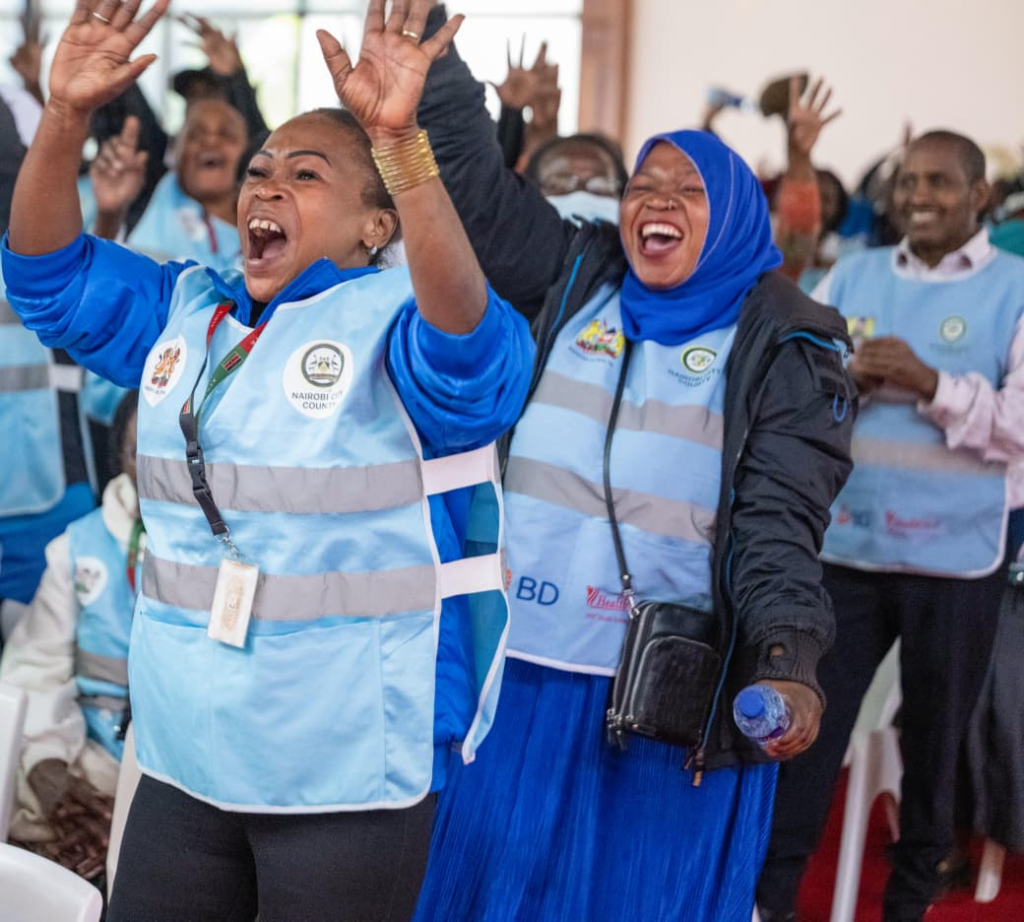
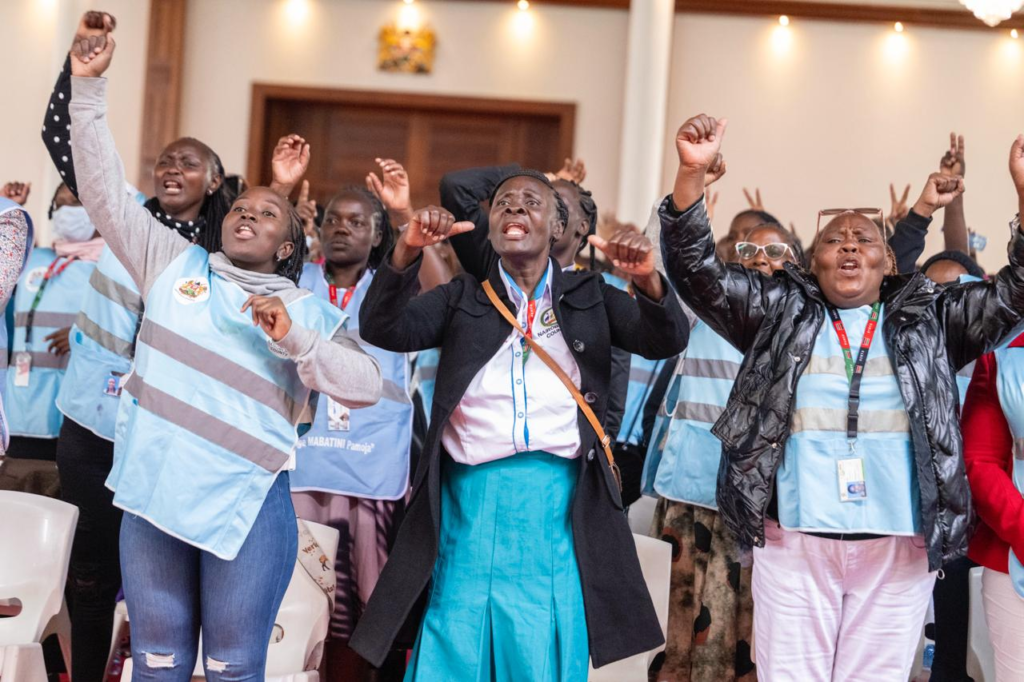
NAIROBI, Kenya — President William Ruto has pledged to pay Social Health Authority premiums for thousands of community health promoters, telling 8,000 frontline workers at State House that those who safeguard the nation’s health deserve coverage for their own families.
Addressing the promoters on July 25, 2026, Ruto said the government would begin paying their SHA premiums “this month,” marking a significant welfare commitment to a workforce that has become the backbone of Kenya’s primary healthcare strategy. The announcement comes as the administration pushes to expand SHA coverage nationwide and shift the health system from curative treatment to preventive care.
“Those who dedicate themselves to the health of the nation must also enjoy the dignity of health cover for themselves and their families,” Ruto said.
Ruto community health promoters hail door-to-door prevention gains
The president’s audience represented a fraction of the national cohort deployed since the Community Health Promoters programme launched in October 2023. Ruto said 9.4 million households covering over 30 million Kenyans are now enrolled on the electronic community health information system, a digital platform that tracks screenings, referrals, and follow-ups at household level.
Nairobi County alone fields 7,480 promoters, each equipped by the national government with a medical kit, supplies, and a smartphone for e-CHIS data entry. County records show they have registered 810,590 households — 54 per cent of the local target — and revisited more than 766,000 homes for routine care.

The screening data Ruto cited illustrates the scale of early intervention: nearly 2.7 million diabetes screenings covering 943,000 people, with close to 30,000 referred for further management; 2.16 million hypertension screenings covering 743,000 people, with nearly 50,000 referred; and 1.13 million children under five assessed for malnutrition, diarrhoea, malaria, and pneumonia.
“Those are not mere statistics. Those are diseases caught early, mothers guided to safe deliveries, and children protected before illness takes hold,” Ruto said. “That is what prevention looks like when it is delivered household by household.”
County-national partnership tested by stipend burden
The president acknowledged that the programme relies on a delicate fiscal partnership between Nairobi and the national government. While the national government has allocated resources for CHP stipends, Nairobi County has matched that commitment through June 2026.
Ruto thanked county governments for their “continued commitment,” but the timeline suggests the dual-funding model faces sustainability pressures as more counties struggle with delayed disbursements from the National Treasury.
Under Kenya’s devolved system, health service delivery is a shared function. The Fourth Schedule of the Constitution assigns county governments responsibility for county health services, including primary healthcare, while the national government retains policy leadership and funding for national referral hospitals. The CHP programme sits at the intersection of both levels, creating recurring tension over who bears the wage bill.
“Community health is a strategic pillar of our Bottom-Up Economic Transformation Agenda, our primary healthcare agenda, and our commitment to Universal Health Coverage,” Ruto said.
SHA transition raises questions on promoter integration
The pledge to pay SHA premiums for CHPs comes amid a broader overhaul of Kenya’s health financing. The Social Health Authority, which replaced the National Hospital Insurance Fund, has faced teething problems since rollout, including registration bottlenecks and confusion over benefit packages.
By enrolling CHPs as beneficiaries, the government is effectively using the promoters as both enrolment ambassadors and proof of the system’s reach.
“You will educate households on their benefits, support registration and enrollment, facilitate referrals, and strengthen the preventive care that lowers the cost of health for every family and for the nation,” Ruto told the promoters.
Ruto community health promoters face workload pressures
Despite the fanfare at State House, promoters have previously raised concerns about delayed stipends, heavy household targets, and the cost of maintaining smartphones in low-income areas. The president’s promise of “sustainable remuneration” and continued training did not specify whether stipend rates would increase or whether the SHA premium would cover dependents beyond immediate family.
As the 2027 election cycle approaches, the administration is betting that visible UHC milestones — millions screened, thousands insured, promoters equipped — will translate into political capital. But the real test lies in whether the SHA premiums are paid on time and whether county governments sustain their share of the stipend burden beyond June.
“This is the plain truth of Universal Health Coverage: It is not won in hospital wards. It is won at the doorstep,” Ruto said. “You are not simply supporting healthcare reform. You are leading it from the frontlines.”


