




NAIROBI, Kenya — Rwanda’s Ambassador to Kenya, Ernest Rwamucyo, has warned that genocide ideology remains a serious threat to peace and stability in the Great Lakes region, citing eastern Democratic Republic of Congo (DRC) as an area where ethnic hatred and extremist rhetoric continue to fuel insecurity.
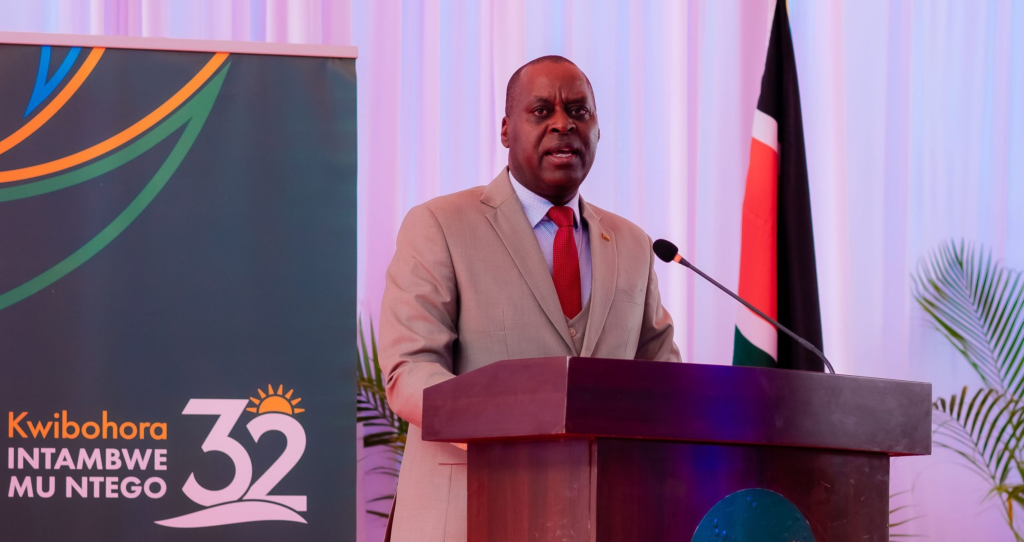
Speaking during celebrations marking the 32nd anniversary of Rwanda’s Liberation Day, known as Kwibohora, Rwamucyo said the region must confront hate speech and incitement before they escalate into mass atrocities.
“Genocide ideology is not merely a painful reminder of history. It remains a real and present danger,” the ambassador said.
He argued that extremist groups operating in eastern DRC continue to promote ethnic hatred, denial and narratives that dehumanise Congolese Tutsi communities.
“Across our region, particularly in eastern Democratic Republic of the Congo, extremist groups continue to propagate ethnic hatred, denial, and narratives that dehumanize Congolese Tutsi,” he said.
According to the ambassador, such ideologies continue to threaten civilians, perpetuate cycles of violence and undermine efforts to achieve lasting peace across the Great Lakes region.
Call for Regional Action
Drawing lessons from the 1994 Genocide against the Tutsi in Rwanda, Rwamucyo said genocide begins with hate-filled rhetoric rather than violence itself.
“The international community has repeatedly affirmed that genocide begins not with weapons but with words, with hatred, incitement, discrimination, and the systematic dehumanization of others,” he said.
He called for coordinated regional and international efforts to counter hate speech, violent extremism and genocide ideology before conflicts escalate.
“This is why Rwanda continues to call for collective regional and international action against all forms of hate speech, violent extremism, and genocide ideology,” Rwamucyo said.
“Silence in the face of such threats has never protected humanity. History teaches us that prevention requires courage, honesty and timely action.”
The ambassador also urged countries in the region to embrace dialogue, justice and cooperation instead of narratives that deepen ethnic and political divisions.
“As mankind sharing a common destiny, we must reject narratives that divide our peoples and instead invest in dialogue, cooperation, justice and sustainable peace,” he said.
Commemorating Liberation Day
Liberation Day marks July 4, 1994, when the Rwanda Patriotic Front (RPF) ended the Genocide against the Tutsi, bringing to an end approximately 100 days of mass killings that claimed more than one million lives.
The annual commemoration is regarded as the beginning of Rwanda’s post-genocide recovery and reconstruction.

Kenya Reaffirms Ties with Rwanda
Representing the Kenyan government at the event, Foreign Service Academy Director General Ambassador Patrick Wamoto said the lessons of the 1994 genocide must remain central to global efforts to prevent future atrocities.
“The Rwanda genocide remains one of the darkest chapters in the history of humanity, and the world must never forget its lessons,” Wamoto said.
He commended Rwanda’s recovery over the past three decades, describing it as an example of the impact of visionary leadership, national unity and resilience.
“Rwanda stands as a testament to what visionary leadership, national unity, resilience, and an unwavering commitment to the welfare of its people can achieve,” he said.
Wamoto also reaffirmed Kenya’s strong diplomatic ties with Rwanda, saying the two countries remain committed to advancing regional integration and peace.
“Kenya greatly values its close friendship with Rwanda, a relationship anchored in mutual respect and shared aspirations,” he said.
He added that Nairobi and Kigali remain united in pursuing “an Africa that is peaceful, integrated, and driven by the aspirations of its people.”


