




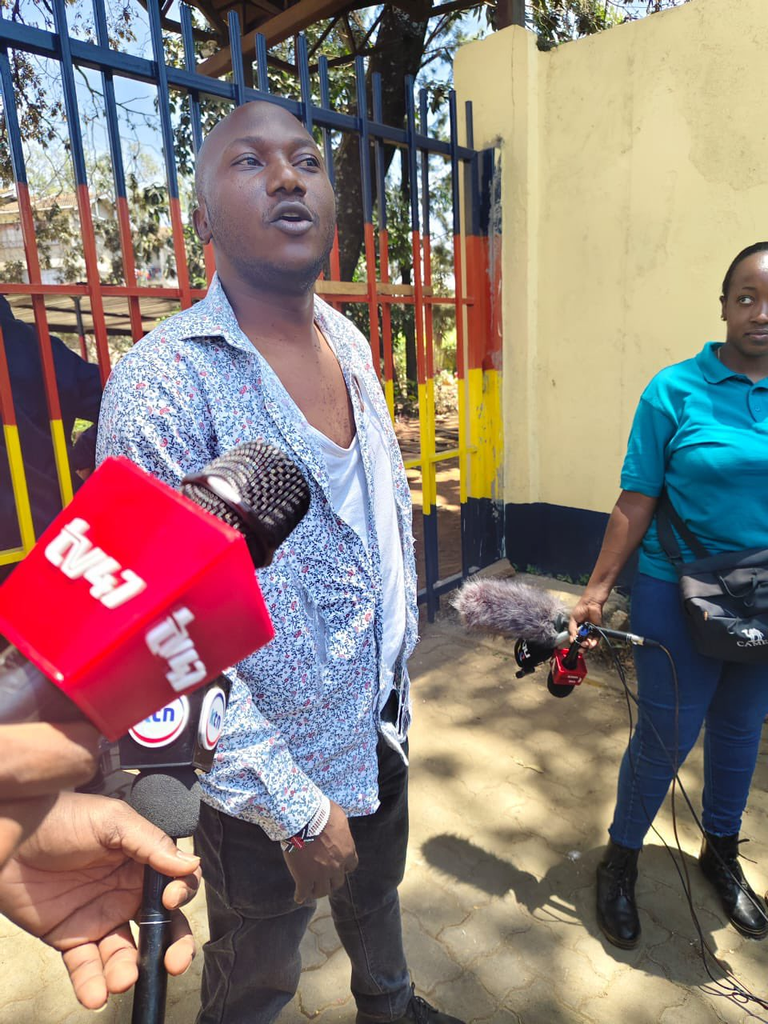
NAIROBI, Kenya— The Crime Journalists Association of Kenya (CJAK) has demanded an independent investigation into the arrest and assault of Citizen TV journalist Francis Odee while he was covering demonstrations against rising fuel prices in Nairobi’s Central Business District.
In a statement issued on Tuesday, October 20, CJAK condemned the incident, saying journalists should not be arrested or physically harmed for carrying out their professional duties.
The association welcomed Odee’s release from police custody but maintained that his release alone was insufficient, calling for accountability over the circumstances of his arrest and his treatment while detained.
CJAK Chairperson Joseph Muraya urged the National Police Service (NPS) and the Independent Policing Oversight Authority (IPOA) to establish the grounds for the arrest, investigate what happened in custody and identify any officers who may have committed assault or other misconduct.
The statement followed reports that Odee was manhandled by plainclothes police officers as he covered protests along Kimathi Street in Nairobi on Tuesday.
How Odee was arrested
According to reports by Citizen Digital and other Kenyan media outlets, Odee was on assignment covering demonstrations against the latest increase in fuel prices when police officers moved to arrest him.
Footage described in reports showed officers dragging the journalist along Kimathi Street, near the junction with Kenyatta Avenue, before bundling him into a waiting police vehicle.
Members of the public and fellow journalists reportedly protested the arrest, telling the officers that Odee was a journalist carrying out his assignment.
The appeals did not prevent the officers from taking him away.
In an account published by K24 Digital after his release, Odee said an officer in uniform directed other officers to arrest him despite his explanation that he was a journalist.
He also reported that four people were arrested in the incident: two activists, Odee and another individual described in his account as a street person.
The journalist was taken to Central Police Station, where he was detained before being released.
At the time of the reports reviewed for this story, authorities had not publicly provided a detailed explanation of the specific grounds for his arrest.
The reported sequence of events has raised questions about police conduct during public demonstrations and the protection afforded to journalists covering events of public interest.
CJAK demands independent investigation
In its statement, CJAK said the circumstances surrounding Odee’s arrest and alleged assault must be fully and independently investigated.
The association called on the National Police Service and IPOA to establish why the journalist was arrested, determine what happened during his detention and identify anyone responsible for possible violations of the law.
It further called for officers found to have engaged in misconduct to be held accountable.
CJAK acknowledged that police have a responsibility to maintain public order but stressed that this responsibility does not permit intimidation or violence against journalists performing their duties.
The association also pledged to continue following the case and urged authorities to ensure that media practitioners can cover public events safely and without fear.
What the Constitution says about journalists’ freedom
The incident has brought renewed attention to constitutional protections for media freedom and personal security in Kenya.
Article 34(1) of the Constitution of Kenya, 2010, guarantees the freedom and independence of electronic, print and other forms of media.
Article 34(2) prohibits the State from exercising control over or interfering with people engaged in broadcasting, publication or the dissemination of information, and from penalising anyone for an opinion, view or the content of a broadcast or publication.
Article 29 also protects every person against arbitrary deprivation of freedom and against violence, torture and cruel, inhuman or degrading treatment.
The circumstances of Odee’s arrest therefore warrant scrutiny, including the grounds relied upon by the officers, the manner in which force was used and whether his rights were respected.
Fuel protests behind the arrest
Odee’s arrest occurred as demonstrators took to Nairobi’s city centre to protest rising fuel prices and their impact on the cost of living.
The Energy and Petroleum Regulatory Authority announced new maximum pump prices in its October 14 review, with the revised prices taking effect on October 15.
Super petrol increased by Sh12.93 per litre, diesel by Sh9.90 and kerosene by Sh28.49.
Fuel prices have a direct bearing on transport costs, the movement of goods and the operating expenses of businesses. Increases can also place additional pressure on households already dealing with higher living costs.
The protests provided the immediate setting for Odee’s assignment, which placed him among the journalists reporting on public reaction to the price changes.
His arrest has consequently raised a separate concern about the ability of journalists to document demonstrations and report on police actions without being subjected to unjustified interference.
Pressure for accountability
While Odee’s release ended his immediate detention, CJAK says questions remain about why he was arrested and how he was treated.
An independent investigation would help establish the sequence of events, determine whether the officers acted lawfully and clarify whether disciplinary or other legal action is warranted.
The National Police Service and IPOA had not, in the reports reviewed for this article, issued a detailed public account resolving the allegations.
CJAK’s demand places the focus on accountability rather than release alone, while the circumstances of the incident remain subject to verification and investigation.



