




NAIROBI, Kenya — Nairobi Governor Johnson Sakaja has warned critics not to mistake his quiet approach to politics for weakness, saying he has deliberately chosen to focus on service delivery but could change strategy if necessary.
Speaking outside City Hall after the presidential address at the Nairobi City County Assembly on Thursday, Sakaja said some leaders had misinterpreted his restrained public posture.
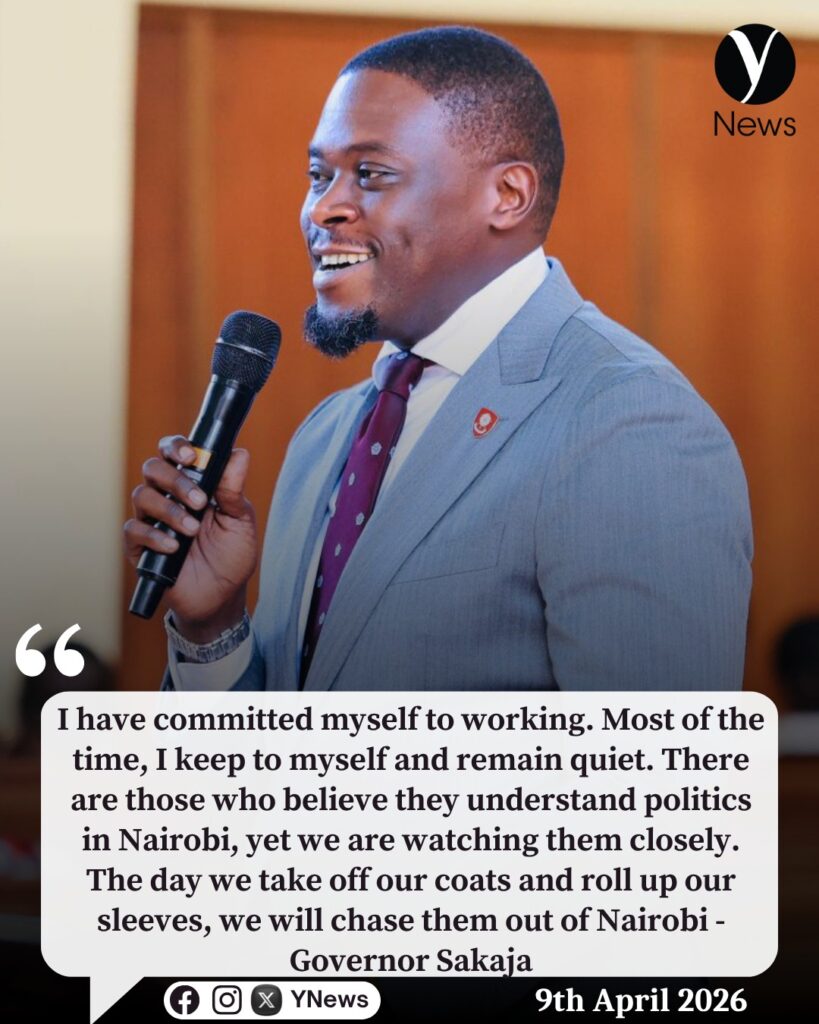
“Some people think that they know politics here in Nairobi. I have chosen to focus on my work, and many times I keep quiet, but that should not be misunderstood,” he said.
The governor’s remarks come amid heightened political activity in the capital, with leaders increasingly engaging in public exchanges and positioning ahead of future contests.
Sakaja said his restraint has been intentional, aimed at prioritising governance over confrontation.
However, he signalled he could shift tactics if provoked. “The day we take off our coats and fold our shirts, we will chase them out of Nairobi,” he said, in what observers interpreted as a warning to political rivals.
At the same time, Sakaja cautioned against divisive politics, particularly along ethnic lines, emphasising Nairobi’s diversity. “Nairobi does not need tribal politics. Nairobi has 47 communities,” he said.
He added that the capital should remain inclusive and open to all residents regardless of political affiliation. “We are broad-based. Nairobi is for everyone, and no one should feel excluded,” he said.
Sakaja acknowledged the presence of supporters from multiple political formations, including the Orange Democratic Movement and the United Democratic Alliance, saying the diversity reflects Nairobi’s political landscape.
The governor reiterated that his leadership remains focused on service delivery rather than constant political exchanges. “I have committed myself to working for the people of Nairobi,” he said.
Sakaja has recently faced criticism from a section of leaders but has largely refrained from responding publicly.
His latest remarks signal readiness to engage more directly in the political arena while maintaining that governance remains his priority.



