




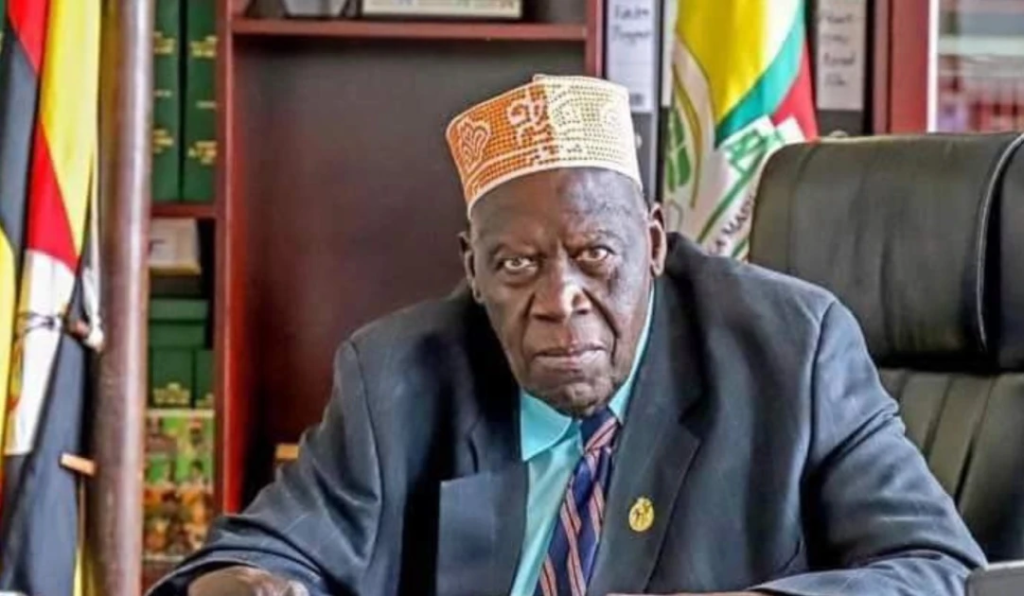
KAMPALA, Uganda — Uganda’s veteran statesman and former Second Deputy Prime Minister, Gen. Moses Ali, has died aged 87, bringing to an end a political and military career that spanned more than five decades and shaped some of the country’s most significant post-independence events.
President Yoweri Museveni announced that Gen. Ali died at Nakasero Hospital in Kampala at 4 p.m. on Saturday. He did not disclose the cause of death.
In a statement, President Museveni described Ali as a dedicated patriot who had served Uganda with distinction both as a soldier and political leader.
“I have received the sad news of the death of Gen. Moses Ali. He has rendered long service to Uganda as a soldier and political leader. His contribution, including as a modern farmer in West Nile, will be greatly missed. May his soul rest in eternal peace,” Museveni said.
The announcement ended hours of speculation following reports by Ugandan media outlets that the veteran politician had died. Family associates and political leaders had also shared messages of condolence before the presidency confirmed the news.
Gen. Ali had only weeks earlier been sworn in as a member of Uganda’s 12th Parliament after winning re-election to represent Adjumani West County in January, making him one of the oldest legislators in the country.
Career spanned Uganda’s turbulent political history
Born on April 5, 1939, in Atabo Parish, Adjumani District, Ali began his professional life as a schoolteacher before joining the Uganda Army in 1968.
He rose rapidly through the military ranks and became a colonel responsible for training paratroopers before participating in the 1971 coup that brought Idi Amin to power.
However, his relationship with Amin later deteriorated following disagreements over corruption allegations. According to accounts of his life, he fled Kampala after surviving an alleged assassination attempt and went into exile following the collapse of Amin’s government in 1979.
Ali returned to public life after President Museveni assumed power in 1986. Although he was arrested on treason charges in the early 1990s, Uganda’s High Court acquitted him in 1992 after more than two years in detention.
He was elected to the Constituent Assembly in 1994, which drafted Uganda’s 1995 Constitution, before serving in several cabinet positions over the following decades, including Minister for Disaster Preparedness and Refugees.
From 2021 until a cabinet reshuffle in May this year, he served as Second Deputy Prime Minister and Deputy Leader of Government Business in Parliament.
Legacy beyond politics
Gen. Ali also survived an armed ambush in December 2001 and briefly served as chairman of the Federation of Uganda Football Associations.
Academically, he earned degrees from Makerere University and the University of Wolverhampton. In 2012, he was promoted to the rank of four-star general in the Uganda People’s Defence Force (UPDF).
Outside public office, he was widely recognised as a large-scale commercial farmer in Uganda’s West Nile region, a contribution President Museveni highlighted in his tribute.
Gen. Ali is survived by his family. Funeral arrangements had not been announced by Saturday evening.


