




WASHINGTON, United States — The United States has denied entry to Somali football referee Omar Abdulkadir Artan ahead of the FIFA World Cup, citing alleged national security concerns, in a decision that has sparked disappointment in Somalia and renewed scrutiny of Washington’s immigration policies.
Artan, who was named Africa’s Referee of the Year in 2025, had been set to become the first Somali official to referee at football’s biggest tournament. However, US authorities turned him back upon arrival at Miami International Airport over the weekend.
According to US Customs and Border Protection (CBP), a Somali national arriving from Istanbul on Saturday was found inadmissible following additional screening procedures.
An administration official later said authorities had uncovered information linking the traveller to suspected members of terrorist organisations.
“Upon further inspection by CBP, derogatory information, including association with suspected members of terror organizations, was discovered,” the official said.
The official added that the determination rendered the traveller ineligible for admission under the US Immigration and Nationality Act.
“President Trump’s administration will not allow any security threat to enter our country, full stop,” the official stated.
Although US authorities did not publicly identify the individual, FIFA and Somali officials confirmed the affected person was Artan.
The decision effectively ends his participation in the tournament, which the United States, Canada, and Mexico are co-hosting.
A FIFA spokesperson said the governing body had been informed that Artan’s immigration status would not be changed and that he would be unable to train or officiate during the competition.
“FIFA is not involved in host country immigration processes, including visa adjudications,” the organisation said.
The Somali government expressed disappointment, revealing that it had unsuccessfully engaged both US authorities and FIFA in an effort to resolve the matter.
“His international achievements are a source of honour and pride for the Somali people,” Somalia’s Ministry of Sports said in a statement.
The Somali Football Federation (SFF) described Artan’s appointment as a historic milestone for the country and said it had not received an official explanation regarding the denial of entry.
The federation noted that Artan’s selection followed years of dedication, professionalism and integrity on the international stage.
Despite the setback, Artan struck a positive tone while speaking to Reuters at Istanbul Airport before returning home.
“I feel very good now,” he said. “I wanted to thank FIFA for supporting me all the way and the Somali people also. So I am very grateful for FIFA and CAF also.”
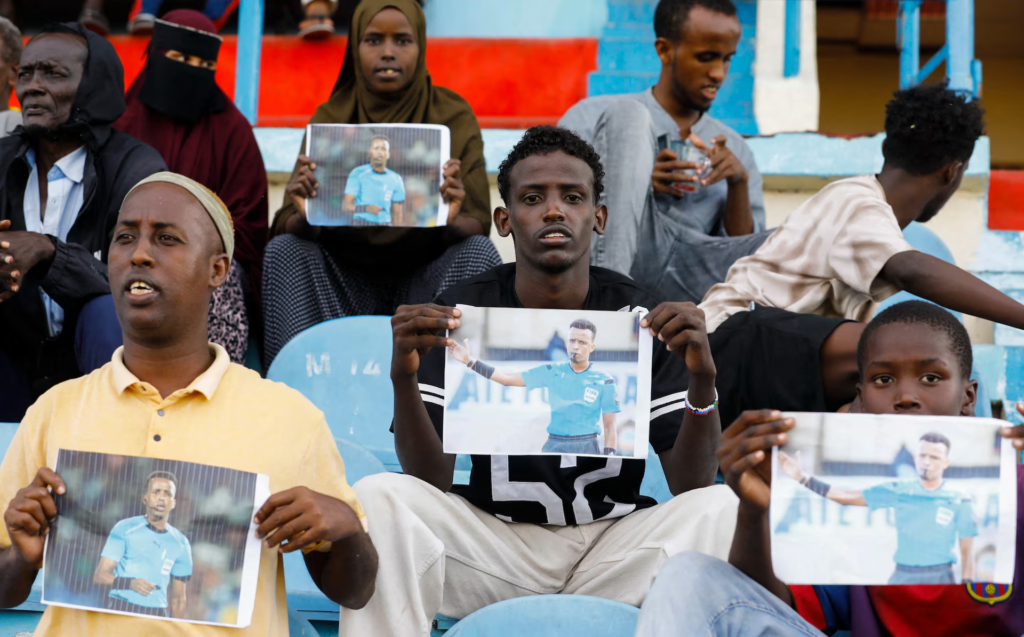
The incident has reignited debate over the impact of the Trump administration’s immigration restrictions on international sporting events. Somalia remains among countries affected by a broad US travel ban introduced last year.
Observers have previously raised concerns about whether athletes, officials and supporters from affected nations could face difficulties attending major international competitions hosted in the United States.
US officials, however, defended the decision, insisting that immigration laws and security vetting apply equally regardless of an individual’s profession or international status.
CBP Commissioner Rodney Scott said authorities routinely deny entry to individuals deemed ineligible under US law.
“I don’t really care what you do for a living. The law is still the law,” Scott said. “If you don’t meet the qualifications to come into the country, we’re not letting you in just because we want you to referee a game.”
The case is likely to intensify discussions over balancing national security concerns with the logistical and diplomatic demands of hosting global sporting events.



