




ADDIS ABABA, Ethiopia — The African Union (AU) Commission has reaffirmed its commitment to strengthening cooperation with the United Nations Population Fund (UNFPA) as both institutions seek to advance health, development, and demographic priorities across the continent.
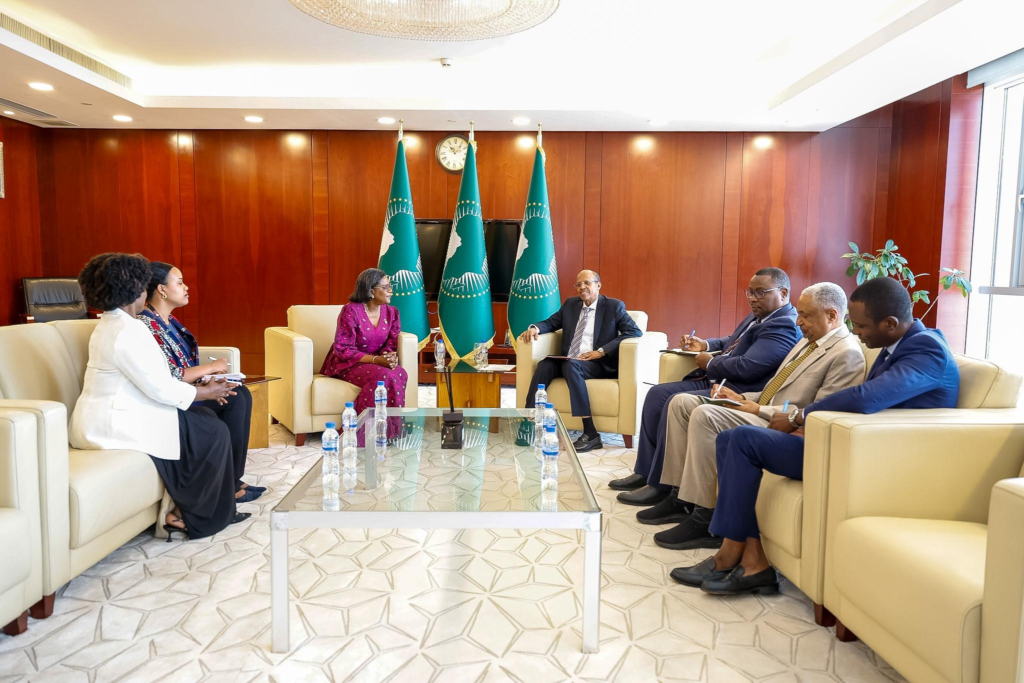
AU Commission Chairperson Mahmoud Ali Youssouf received the credentials of the newly appointed UNFPA Representative to the AU, Ndeye Rose Sarr, during a meeting in Addis Ababa.
Youssouf commended the long-standing partnership between the AU and UNFPA, highlighting the agency’s contribution to continental initiatives focused on population development and improved health outcomes.
He pointed to UNFPA’s support in implementing the Addis Ababa Declaration on Population and Development Beyond 2014 and the Maputo Plan of Action.
The AU Chairperson also recognised UNFPA’s role in supporting efforts to improve maternal health, newborn care, and reproductive health services across African countries.
Commitment to Continued Collaboration
During the meeting, Sarr expressed appreciation for the engagement and reaffirmed UNFPA’s commitment to deepening cooperation with the continental body.
She briefed the AU leadership on ongoing joint initiatives between UNFPA and AU institutions, including collaboration with the African Union Health, Humanitarian Affairs, and Social Development Department and the Africa Centres for Disease Control and Prevention.
The discussions focused on strengthening coordination and ensuring that joint programmes deliver measurable results for African populations.
Focus on Health and Demographic Challenges
Youssouf emphasised the need for a stronger AU–UNFPA partnership through practical, results-driven actions addressing Africa’s changing demographic landscape.
He said deeper cooperation would be important in supporting the continent’s health systems, development agenda, and population priorities.
The engagement comes as African governments continue working with international partners to address challenges, including maternal mortality, reproductive health access, youth development, and sustainable population planning.
Both institutions said continued collaboration will remain central to advancing Africa’s development objectives and improving health outcomes for communities across the continent.


