




NAIVASHA, Kenya — The Kenya Wildlife Service (KWS) has rescued a month-old baby hippopotamus in Naivasha after its mother was found dead, in an operation that wildlife officials described as both delicate and emotionally challenging.
The rescue unfolded on Saturday at Oloiden Resort, where KWS veterinary and capture teams responded to a distress call while conducting a separate wildlife relocation exercise at Kedong Ranch.
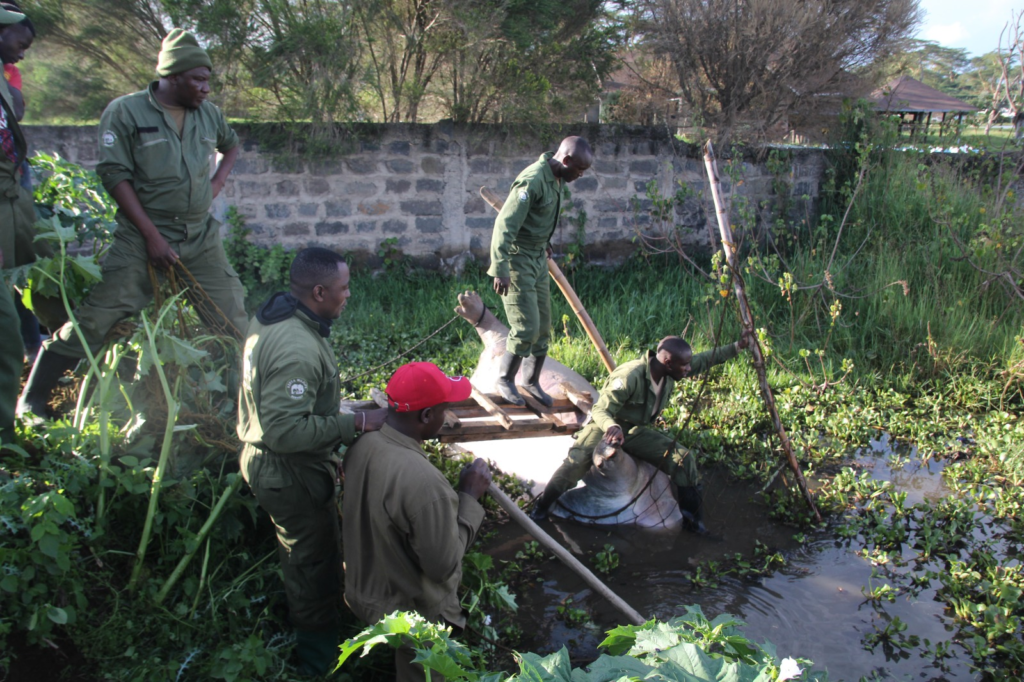
On arrival, officers found the calf clinging to its mother’s lifeless body, nudging her and emitting distress calls after what is believed to be a natural death that had occurred more than a day earlier.
According to KWS, the team faced both logistical and emotional challenges, as the young animal remained closely attached to its mother and was reluctant to move.
“The calf could not understand death, only absence,” the agency said in a statement, noting that the rescue required careful planning to avoid causing further distress or injury.
In a rare and difficult decision, the team used the mother’s body as an anchor point to safely access and secure the calf, balancing the need for immediate intervention with the animal’s instinctive attachment.
The young hippo was eventually separated and stabilised before being transferred to the Sheldrick Wildlife Trust, which specialises in the rehabilitation of orphaned wildlife.
KWS said the calf will now undergo specialised care and monitoring as it begins a long recovery process without its mother.
The incident highlights the realities of wildlife conservation, where natural deaths, habitat pressures, and human-wildlife interactions often leave young animals vulnerable.
Authorities praised the veterinary and capture teams for their efforts, noting that such operations demand not only technical expertise but also resilience in the face of difficult circumstances.
“They are the quiet voice for those who cannot speak,” KWS said, emphasising the role of frontline conservation staff in protecting vulnerable wildlife.
Naivasha and its surrounding ecosystems remain key habitats for hippos and other wildlife, making conservation interventions critical to maintaining ecological balance.
KWS urged continued public support for wildlife protection efforts, noting that successful rescues depend on timely reporting, community cooperation, and sustained investment in conservation programmes.



