




NAIROBI, Kenya — Interior Cabinet Secretary Kipchumba Murkomen has announced the deployment of a special police unit to Trans-Nzoia County to curb rising cases of political violence and criminal gang activity.
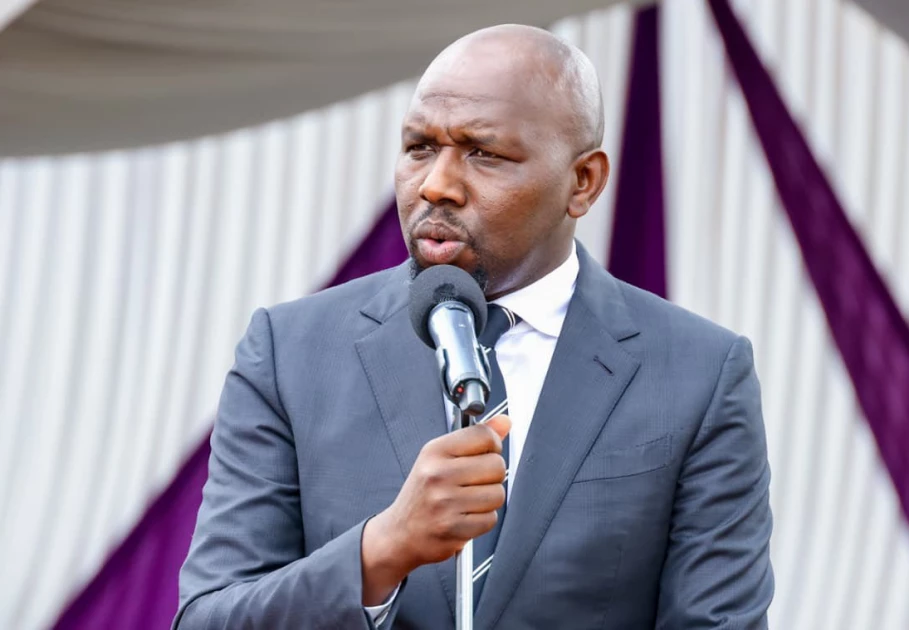
Speaking during an interdenominational church service at KAG Mother Church Grounds in Kitalale, Murkomen said the government had reached an agreement with the Inspector General of Police to urgently dispatch a specialised team to restore order in the region.
“I have told the Inspector General of Police to deploy a special team to Trans Nzoia to put an end to gangs that have been terrorizing locals,” he said.
The move comes amid growing concern over insecurity linked to organised gangs, with reports of youth being recruited, armed with crude weapons, and mobilised for violence.
Murkomen issued a stern warning to political leaders, both in the county and nationally, against financing or facilitating such groups, signalling a broader crackdown beyond just street-level criminals.
“I am warning local leaders—the vice of recruiting youths, arming them with crude weapons, and intoxicating them to cause violence must stop. Trans Nzoia is too important to be left at the mercy of criminal gangs,” he added.
The announcement underscores the government’s increasing focus on internal security, particularly in regions where political tensions risk escalating into violence. It also reflects ongoing efforts to address youth exploitation in criminal networks, a recurring issue in Kenya’s electoral and governance landscape.
Murkomen was accompanied by several leaders, including Allan Chesang and a host of Members of Parliament from the region, signalling political backing for the security intervention.
The deployment of a special police unit is expected to involve intelligence-led operations targeting organisers and financiers of gang activity, alongside efforts to dismantle existing networks.
Under the Constitution of Kenya 2010, the state is mandated to ensure the security of all citizens and protect life and property. Security operations of this nature often fall under the coordination of the National Police Service, guided by Article 239 on national security organs and their functions.
The development also comes against a backdrop of heightened national attention on crime and policing reforms, including recent discussions on specialised units to manage urban and regional security threats.


