




DURBAN, South Africa — Thousands of undocumented migrants are fleeing South Africa ahead of an unofficial June 30 deadline set by anti-immigrant groups, forcing many to leave behind spouses and children as fears of xenophobic violence intensify.
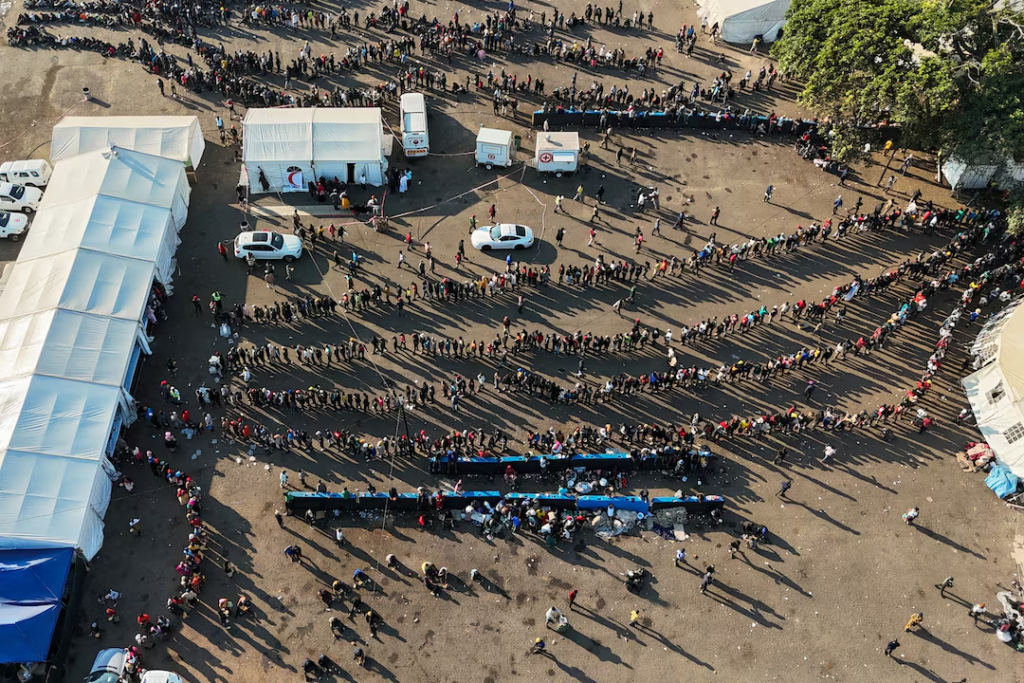
Among them is 30-year-old Malawian national John Allen, who packed a small bag, bid farewell to his South African partner and their one-year-old son, and travelled to a makeshift transit camp in Durban, where thousands of migrants are awaiting transport out of the country.
“The reason I would like to stay is I feel bad for my child. He’s too young. When I’m gone who’s going to support him?” Allen told Reuters.
Allen said his partner earns about 500 South African rand (about $30) a week as a cleaner, while he had been earning nearly four times that amount through contract work at a manufacturing company despite lacking legal immigration documents.
He said rising anti-migrant attacks in recent weeks left him with little choice but to leave.
“There’s two options: I can lose my life or I can leave,” he said.
The departures follow escalating anti-immigrant protests in parts of South Africa, where vigilante groups have demanded that undocumented foreign nationals leave the country by June 30.
Although the South African government has not endorsed the deadline and has condemned violence against migrants, it has faced criticism from African governments and civil society organisations over what they describe as an inadequate response to the attacks.
Hundreds of migrants remained at the Durban transit site on Monday, with buses departing regularly as authorities worked to relocate people before demonstrations planned for Tuesday. Women, children and infants were seen sheltering on blankets and cardboard while humanitarian organisations distributed food, clothing and other essentials.
South Africa’s Department of Home Affairs has established a temporary processing centre at the camp to facilitate deportation procedures for undocumented migrants. Officials are currently prioritising transfers from Durban to the Musina border post ahead of the anticipated protests.
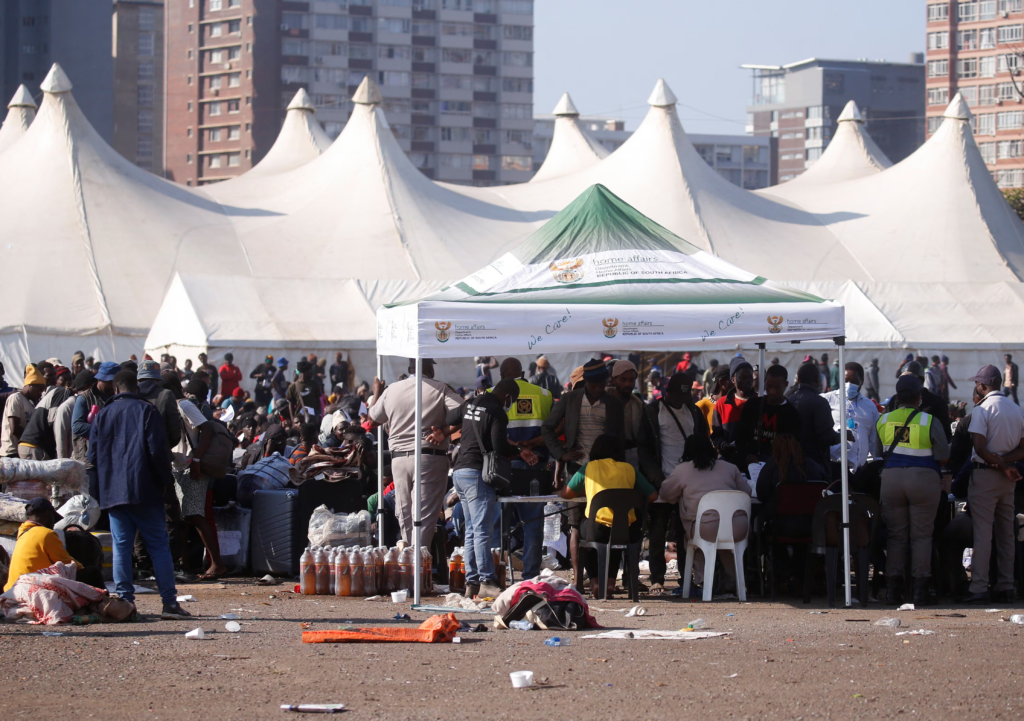
Many migrants at the camp said they feared remaining in South Africa beyond the deadline, regardless of their immigration status.
Although organisers of the protests say they are targeting undocumented migrants, several legal migrants have also reported assaults, intimidation and destruction of property during previous outbreaks of xenophobic violence.
Another migrant, Amadou Awali, said he was leaving behind two young sons because their South African mother could not afford to support them alone.
“I’m worried for the children,” Awali, who has worked in plumbing and construction in South Africa since 2019, told Reuters. He said he hopes to return after a few months once the situation stabilises.
South Africa has experienced repeated waves of xenophobic violence over the past two decades, often driven by high unemployment, economic hardship and competition over jobs and public services. Human rights organisations have consistently called on authorities to strengthen protection for migrants and prosecute those responsible for attacks.



