




NAIROBI, Kenya — The National Police Service (NPS) has unveiled an ambitious security modernization plan ahead of the 2027 General Election, with Inspector General of Police Douglas Kanja saying the service is strengthening training, expanding police infrastructure, and adopting advanced technology to guarantee peaceful polls.
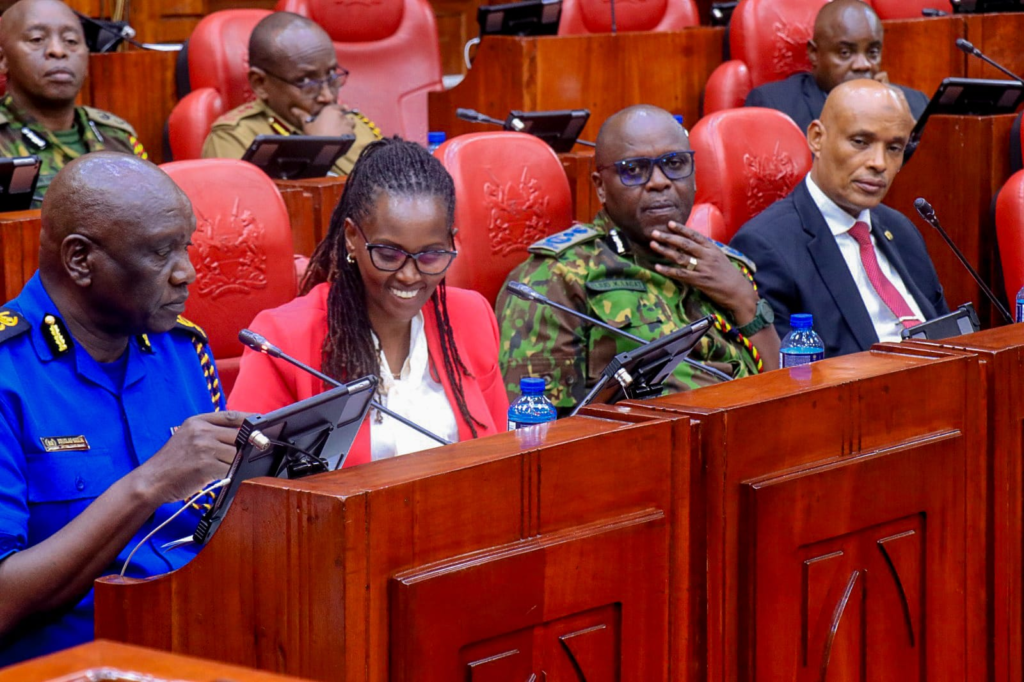
Appearing before the National Assembly Departmental Committee on National Administration and Internal Security on Monday, Kanja said the police service was fully focused on ensuring the country experiences secure and credible elections, noting that preparations had already begun through enhanced officer training and technological upgrades.
“We are set and ready to prepare because we have done it before. We did it during the 2022 elections, and the outcomes are there. We are going to do it again in 2027,” Kanja said.
The Inspector General disclosed that at least 10,000 police recruits are currently undergoing training in various police training institutions across the country to reinforce personnel capacity ahead of the elections.
He appealed to Parliament to support additional recruitment and operational funding to strengthen preparedness.
Kanja emphasized that elections are central to Kenya’s democracy and that the police service has a constitutional duty to create a secure environment for citizens to exercise their democratic rights peacefully.
“Training is very important. We need all our officers to be prepared on matters of elections, including public order management. Support from this committee will go a long way in helping us enhance our preparedness,” he said.
At the centre of the reforms is the proposed Integrated Command, Control, Communication and Coordination (IC4) security framework, which will replace the ageing IC3 surveillance system.
According to Kanja, the new platform will usher in advanced policing technologies, including digital Occurrence Books (OBs), body-worn cameras for officers, automatic traffic fine systems, and enhanced CCTV surveillance.
He said the digital transformation would improve accountability, transparency and operational efficiency within the police service.
“The adoption of technology in policing, including body cameras, will provide evidential value and can also exonerate officers when falsely accused,” Kanja said.
He added that the automatic fine system, coupled with advanced CCTV cameras under the IC4 programme, would significantly reduce direct interactions between motorists and traffic police officers, thereby curbing corruption and improving service delivery.
“We are headed in that direction. In the next three to four months, we should be having the digital systems with us,” he stated.
The Inspector General also defended plans to operationalize the National Police Service Level Four Hospital at Mbagathi, describing it as a critical facility that would provide specialized healthcare for officers injured while on duty.
“Our officers operate in dangerous environments across the country, including border points and conflict-prone areas. This hospital will ensure they receive the best specialized treatment befitting the service they render to Kenyans,” Kanja said.
He noted that medical personnel recruited for the facility are already sharpening their skills through placements at Kenyatta National Hospital as the service awaits budgetary allocation to fully operationalize the hospital.
The committee also heard that police infrastructure had expanded significantly over the last three years.
Ms. Bernice Lemedeket, the Secretary Administrative and Accounting Officer for the National Police Service, said the number of police stations receiving Appropriations in Aid support had risen from 575 to 1,142, representing a 98 per cent increase.
She said sub-counties had increased from 363 to 398 while patrol bases had expanded from 42 to 83.
“We have made tremendous improvement, but we still need to cover the remaining stations,” she said.
However, Lemedeket cautioned against politically-driven expansion of police stations, saying the country needed a strategic approach that balances public demand with financial sustainability.
“Setting up a proper model police station requires infrastructure, human resources, and operational funding. We need strategic expansion as opposed to political expansion so that we improve the quality of service delivery,” she said.
She further revealed that the service still requires more than 10,000 civilian staff to support police operations, noting that only about 2,000 civilians had so far been recruited.
Globally, she said, the recommended ratio is one civilian staff member for every 10 police officers, adding that the shortage was affecting critical administrative functions such as land management and financial operations.
On pending bills, Lemedeket admitted that the Kenya Police Service (KPS) and the Directorate of Criminal Investigations (DCI) continued to struggle due to historical debts and operational constraints.
She explained that KPS inherited huge unpaid bills related to food supplies for remandees, while DCI faced challenges arising from covert operational expenditures.
“KPS carries nearly 70 per cent of National Police Service operations, which strains their operational budget, while DCI’s allocation is only enough to sustain current operations and not clear historical pending bills,” she said.
Despite the challenges, she maintained that the National Police Service remained committed to settling pending bills because of their impact on suppliers and the economy.
Kanja also lauded the Internal Affairs Unit for strengthening discipline and accountability within the police service through investigations into misconduct and collaboration with the Independent Policing Oversight Authority (IPOA).
“The Internal Affairs Unit has really helped the National Police Service on matters touching on discipline and investigations. We continue to support it by increasing personnel and expanding offices to regional areas,” he said.
Committee Chairperson Gabriel Tongoyo and members of the National Assembly committee pledged continued engagement with the service on budgetary support to enhance police operations, training and modernization ahead of the 2027 polls.


