




LONDON, United Kingdom — Kenya’s Anti-Counterfeit Authority has stepped up its international engagement on intellectual property protection during the ongoing International Trademark Association Conference at ExCeL London, where global experts are discussing emerging challenges in trademark enforcement and counterfeiting.
The Authority’s Executive Director, Dr. Mbugua Njoroge, represented Kenya in high-level discussions focused on strengthening cross-border cooperation, improving enforcement mechanisms, and addressing the growing complexity of counterfeit trade networks.
During the conference, Dr. Njoroge delivered a presentation outlining the mandate and operational framework of the Anti-Counterfeit Authority, highlighting Kenya’s experience in enforcement and its contribution to combating illicit trade.
His presentation focused on the need for enhanced international coordination, particularly in handling hazardous counterfeit goods that require specialised destruction processes to prevent environmental and public health risks.
He also participated in regional engagements under the Europe, Middle East, and Africa subcommittees, aimed at strengthening collaboration between enforcement agencies across jurisdictions.
The Authority noted that the conference, which brings together trademark professionals, policymakers, and industry leaders from more than 100 countries, serves as a key global platform for shaping future intellectual property policy and enforcement strategies.
Dr. Njoroge also used the forum to extend an invitation to international stakeholders to participate in the upcoming International Symposium on Intellectual Property Protection and Enforcement (ISIPPE 3), an initiative by Kenya aimed at promoting practical dialogue on anti-counterfeiting strategies across Africa and beyond.
Accompanying him was Deputy Director for Education and Public Awareness, Agnes Karingu, who participated in a session under the UNREAL Campaign Committee.
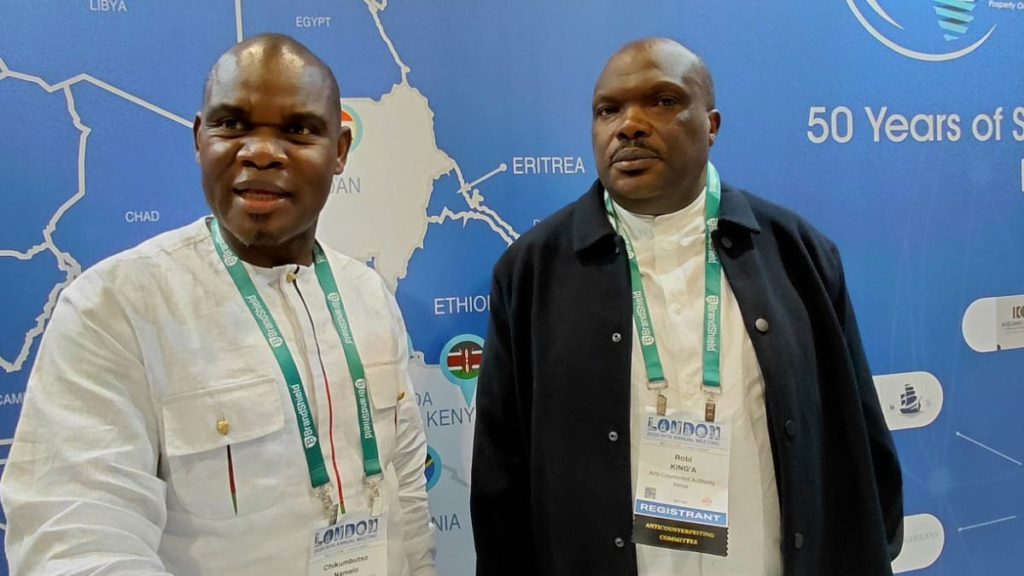
She highlighted Kenya’s public awareness strategies, including school-based programmes, music festivals, engagement with opinion leaders, and collaboration with national administrative officers to strengthen consumer education on counterfeit goods.
Officials said these initiatives are designed to deepen community-level awareness and reduce demand for counterfeit products, which remain a significant challenge in many developing economies.
Counterfeiting continues to pose risks to consumer safety, government revenue, and legitimate businesses, with global trade in illicit goods estimated to run into hundreds of billions of dollars annually.
Kenya’s participation at the London conference reflects broader efforts to align its intellectual property enforcement framework with international best practices while strengthening partnerships that support innovation and economic growth.

